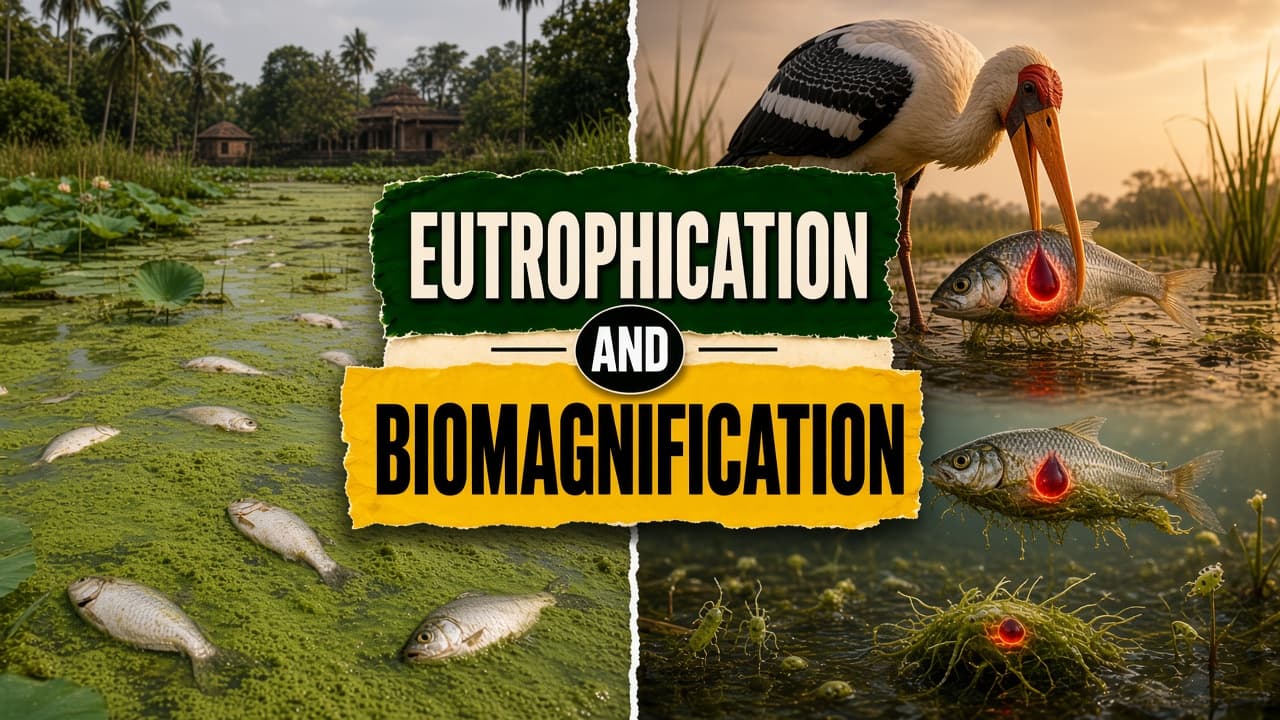
Difference between eutrophication and biomagnification
Eutrophication is nutrient overload that chokes a water body, and biomagnification is the build-up of persistent toxins at higher steps of the food chain.
By UPSCYatra Editorial Team - May 12, 2026
Table of contents
Eutrophication is nutrient enrichment, mainly nitrogen and phosphorus, that triggers algal blooms and then oxygen depletion in a water body. Biomagnification is the progressive build-up of persistent toxins such as DDT, mercury, and PCBs at higher trophic levels in a food chain. The first is a nutrient problem in the water. The second is a toxin problem measured per organism as the food chain climbs.
Difference between eutrophication and biomagnification
Feature
Eutrophication
Biomagnification
Meaning
Nutrient overload that triggers blooms and oxygen loss
Rising concentration of persistent toxins up the food chain
Where
Lakes, estuaries, and coastal dead zones
Soil, water, and food webs, especially aquatic chains
Examples
Lake Erie; Dal Lake and Bellandur in India
Minamata mercury poisoning; DDT and eggshell thinning in raptors
Law
CPCB lake action plans and wetland rules
Stockholm Convention and effluent standards
Measure
BOD rises and dissolved oxygen falls as blooms decay
Concentration per organism peaks at top predators
Effect
Oxygen crash can kill aquatic life across the water body
Slow decline after bans; toxins can rise about 10,000 times from water to an osprey
Upgrade for access and purchase our mains 27 pass.
Fat-soluble storage, then higher levels up the chain
Visible sign
Eutrophication
Green scum, foaming, fish kills
Biomagnification
Illness in top predators, such as eggshell thinning in eagles
Indian context
Eutrophication
Lake encroachment and urban sewage
Biomagnification
Pesticide residues and industrial effluents
Example
Dal Lake foam vs Minamata fishing village
Dal Lake's load of detergent and sewage adds nitrogen and phosphorus. Algae explode, decomposition uses up oxygen, and fish die. That is eutrophication. In Minamata, Japan, a factory discharged methylmercury. Plankton absorbed it, small fish ate plankton, and larger fish ate them. Fishermen then ate the toxic fish. Concentration rose at each level. That is biomagnification. India's Ganga basin faces eutrophication, and old pesticide residues in food chains raise biomagnification concerns.
What this means for the exam
Eutrophication runs from extra nutrients to an algal bloom and then to low oxygen. Biomagnification is a toxin that becomes more concentrated in top predators.
Eutrophication
Eutrophication starts with extra nitrogen and phosphorus. Algae multiply, then decay, and the decay consumes dissolved oxygen. Fish kills follow. Dal Lake's detergent and sewage load produces foam and dead fish. Bellandur is the other Indian example often paired with it. Lake Erie is the classic global case. A biochemical oxygen demand spike is the usual marker.
Nutrient control can reverse much of the damage. Sewage treatment plants and buffer strips are the practical tools, along with CPCB lake action plans and wetland rules. An eutrophic lake can also hold pesticide runoff, so oxygen loss and toxin build-up can occur in the same water. The nutrient pathway is still eutrophication.
Biomagnification
Biomagnification is the increase in concentration of a persistent toxin at successively higher trophic levels. DDT, mercury, and PCBs are the usual agents. They are stored in fat, so each predator concentrates more per gram of body weight. Minamata showed methylmercury moving from plankton to fish to people. Silent Spring described DDT and eggshell thinning in raptors. A rise of about 10,000 times from water to an osprey is the scale often cited.
The process is not simply "more pollution in the river over time." It is a higher concentration per organism as the chain climbs. Bans help slowly because the chemicals persist. The Stockholm Convention and effluent standards are the policy tools. Ganga basin pesticide residues in fish eaten downstream are the Indian concern. The toxin itself need not change dissolved oxygen.
Key takeaway
Eutrophication is nutrient overload that ends in an oxygen crash. Biomagnification is persistent toxins becoming more concentrated up the food chain.
Difference between eutrophication and biomagnification FAQs
What is eutrophication?
Eutrophication is excess nitrogen and phosphorus in a water body. Algae bloom, decay uses oxygen, and aquatic life can die. Dal Lake, Bellandur, and Lake Erie are standard examples.
What is biomagnification?
Biomagnification is the increase in concentration of persistent toxins at higher trophic levels. DDT, mercury, and PCBs are typical agents. Minamata and eggshell thinning in raptors are the usual cases.
What is the main difference between eutrophication and biomagnification?
Eutrophication is a nutrient problem that ends in algal blooms and low oxygen. Biomagnification is a toxin problem in which concentration rises in predators. One is about the water's oxygen. The other is about poison per gram of body tissue.
Does biomagnification occur because algae multiply rapidly in nutrient-rich water?
No. Rapid algal growth describes eutrophication. Biomagnification is the concentration of toxins at higher trophic levels.
Can eutrophication kill aquatic organisms through oxygen depletion?
Yes. Decomposition of algal blooms consumes dissolved oxygen. That oxygen crash is the classic result of eutrophication.
Does biomagnification mean toxins become more concentrated at higher trophic levels?
Yes. Fat-soluble toxins accumulate in tissue. Each predator level concentrates more per gram of body weight.