
Thunderstorm formation is convectional rainfall — daytime heating builds cumulonimbus clouds that often burst by evening. Kalbaisakhi examples for UPSC.
(Editorial Team)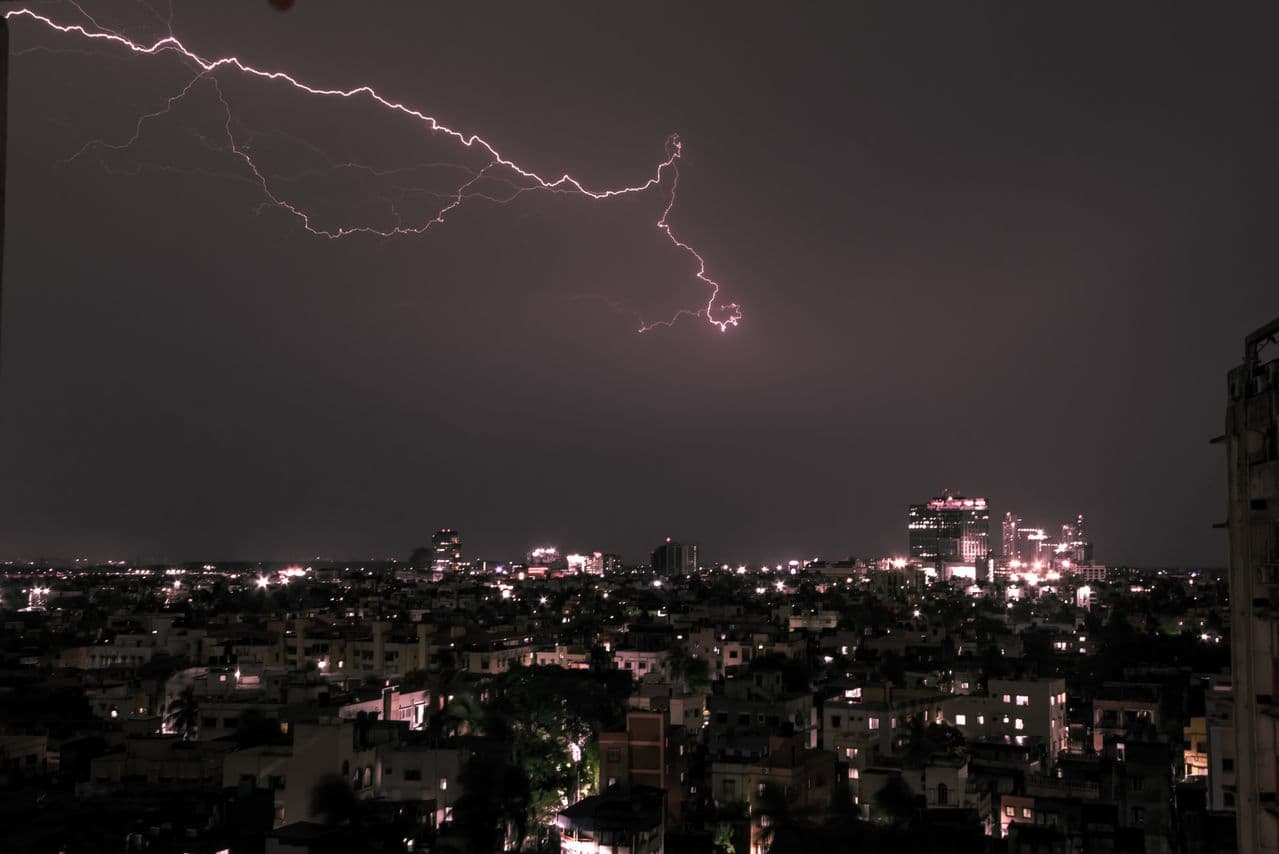
UPSCYatra’s editorial team researches and publishes syllabus guides, exam trends, previous years' questions analysis, and conceptual deep-dives for serious UPSC aspirants.
Valid till Mains 2027
You have probably noticed it without ever thinking about it. The morning is bright and pleasant. The afternoon turns hot and sticky. And then, just as the day starts winding down, the sky suddenly goes dark, the wind picks up, and crack, a thunderstorm rolls in.
It happens again and again, especially in summer. Calm morning, angry evening.
So why does the sky save its biggest tantrum for the end of the day? Why not the cool morning, or the middle of the night?
The answer is simpler than it looks. It comes down to one thing: the storm needs the whole day to build up its energy. And by evening, that energy is finally ready to explode.
That is really the whole secret. Everything else is just that one idea playing out. The sun heats the ground all day. Warm air rises. Moisture climbs with it. And by evening, the sky has stored up enough fuel to let loose.
Let's walk through it step by step.
In one line
Thunderstorm formation is usually convectional: the sun heats the ground all day, moist air rises into tall cumulonimbus clouds, and the storm often bursts in the late afternoon or evening.
A is just a tall, angry cloud that has grown so big it starts producing lightning, thunder, heavy rain, and gusty wind.
Think of it as an ordinary cloud that got overfed. Give a cloud enough warm, moist air rising into it, and it keeps growing taller and taller until it becomes a towering giant.
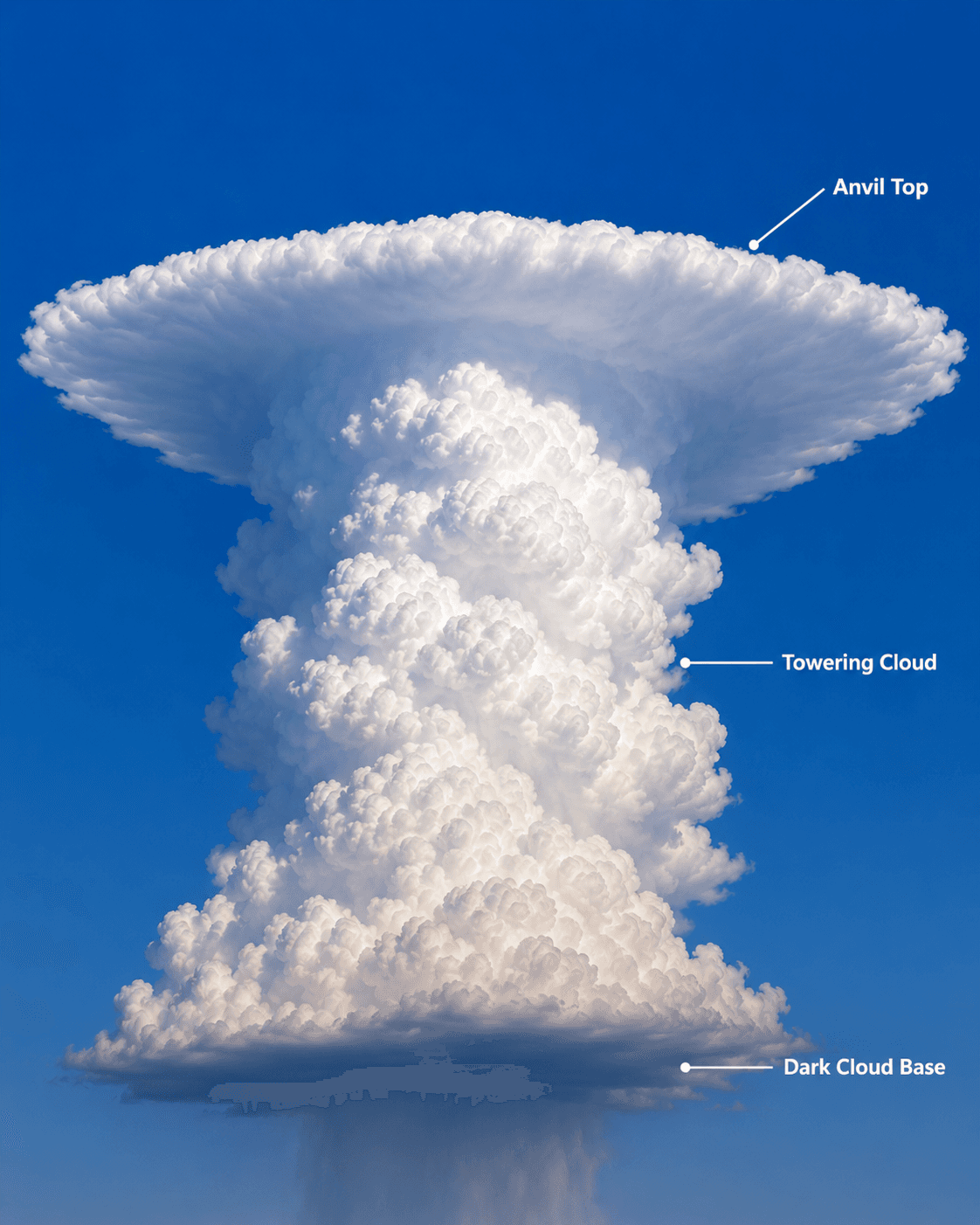
You will notice a few things every time one shows up:
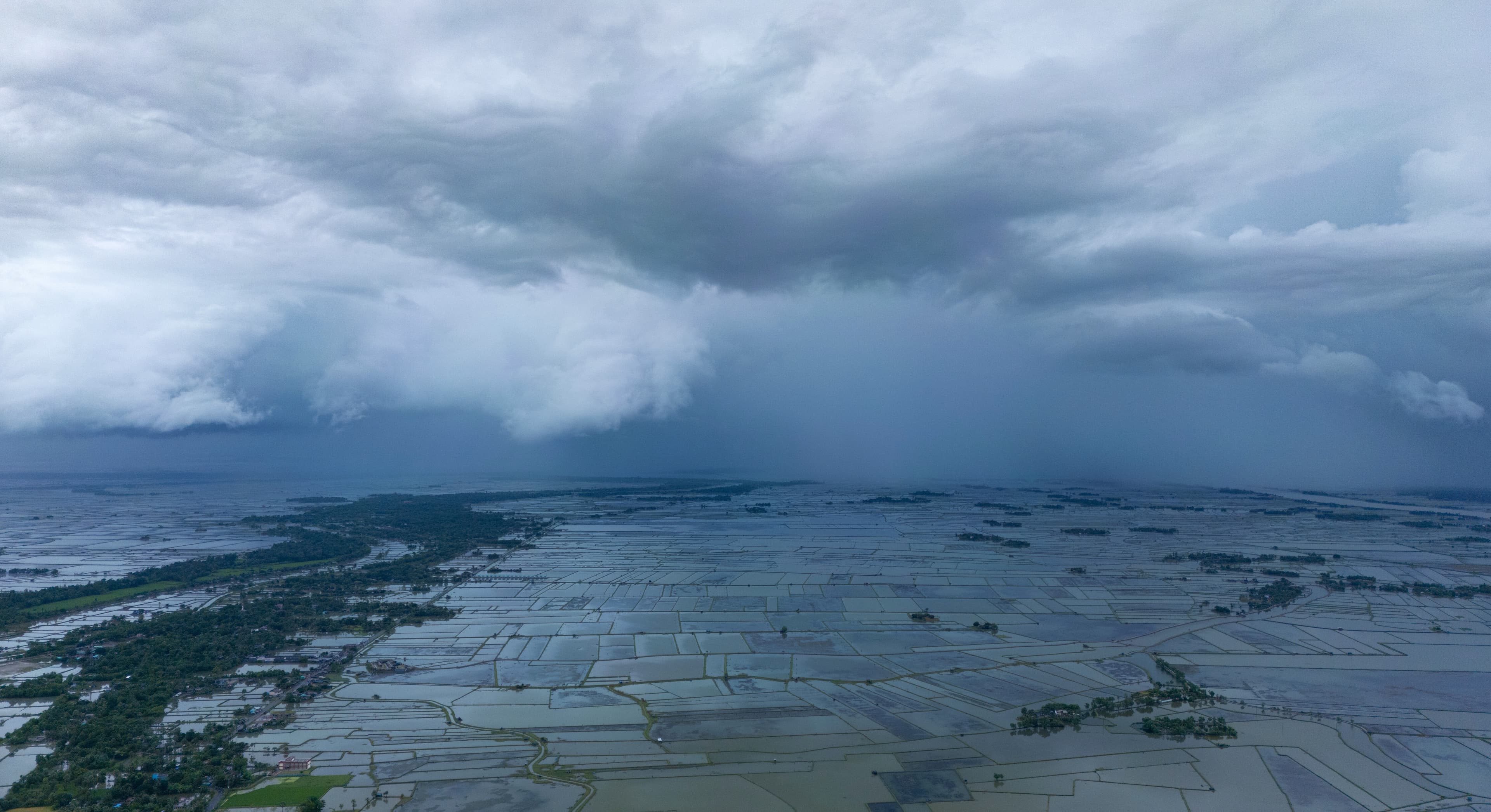
In India, you will spot this pattern in the pre-monsoon months: the (Nor'westers) of Bengal and Assam, the dusty evening storms across the northern plains, and the sudden downpours over the Deccan. Basically anywhere the land bakes under a hot sun and there is moisture in the air.
In the rain-soaked limestone hills of Meghalaya, that same moisture keeps working long after the storm passes — slowly dissolving rock into caves, as we explain in why caves form inside limestone.
And this is not the same as the long, steady rain you get during the monsoon. A thunderstorm is made right there on the spot, in a single afternoon. The hot day itself creates it.
Think of the sun like a slow cooker. It does not heat things instantly. It warms the ground bit by bit, hour by hour.
Here is how it happens. In the morning, the sun is still low and weak. The ground is cool from the night. As the day goes on, the sun climbs higher and pours more and more heat onto the land. The ground soaks it up and gets hotter and hotter, usually peaking in the early afternoon, a little after noon.
The air sitting right on top of that hot ground heats up too. And warm air, being lighter, wants to rise, like a hot-air balloon lifting off.
Three things make this even stronger:
By mid-to-late afternoon, the ground is at its hottest and the rising air is at its strongest.
Scientists call this rising warm air , and the energy stored in humid, unstable air , but you do not need the words to picture it. It is just warm air floating up, the same way a bubble rises through water.
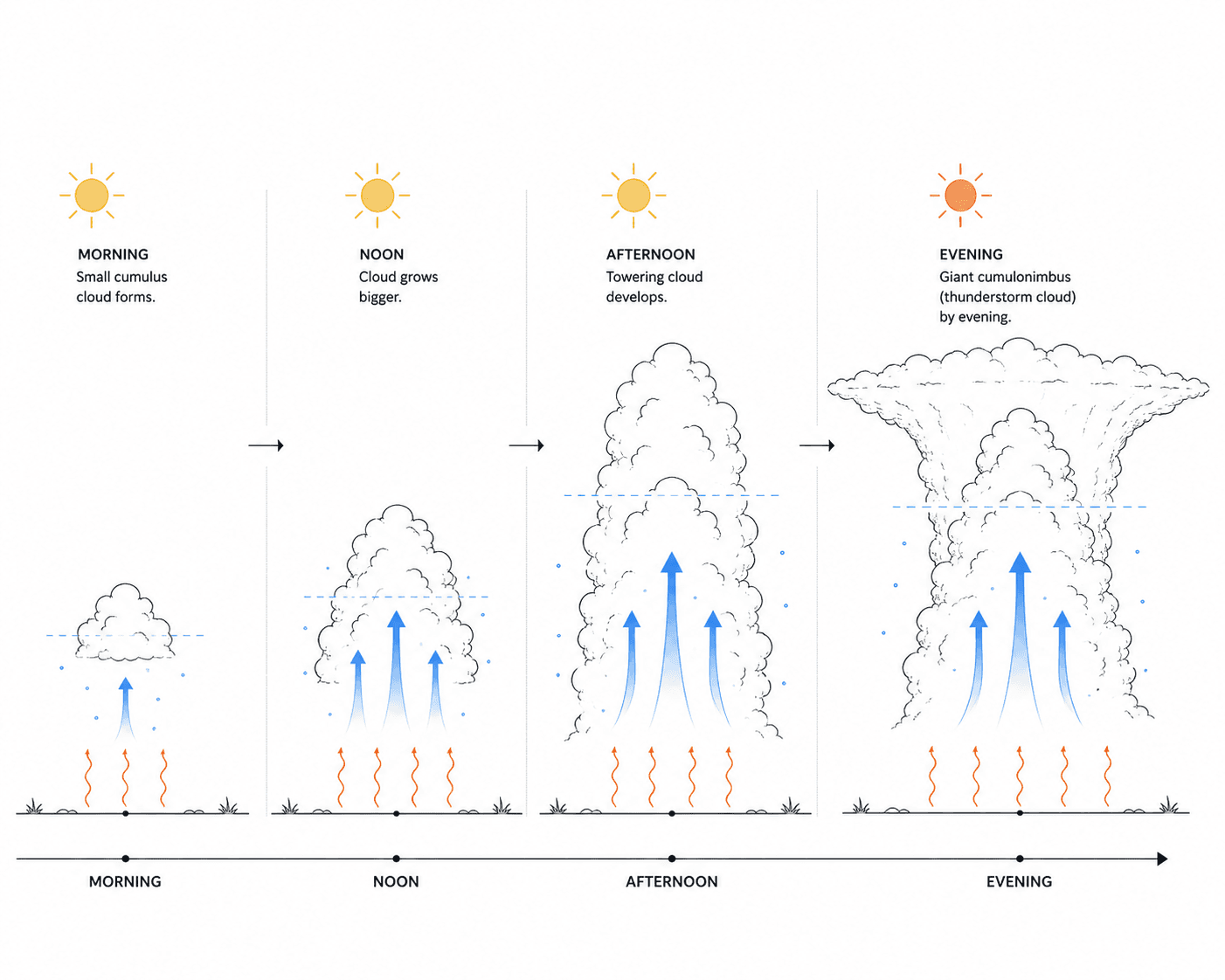
That rising warm air has a job to do: it builds the cloud.
Picture it as an invisible elevator of warm, moist air rising from the hot ground. As it climbs higher, it enters the cooler upper air and chills down. The moisture it carries turns into tiny water droplets, and a cloud is born.
Here is the sequence, one step at a time:
This is why the cloud often looks like a giant cauliflower piling up into the sky: little puffs in the morning, a towering tower by evening. The technical name for this giant is a cloud. Geography textbooks call the rain that falls from this heat-built cloud — and an evening thunderstorm is that process at full power.
It is the same reason a pot of water does not boil the instant you turn on the stove. The heat has to build up first. The storm needs those hours of afternoon sun to grow tall enough to break.
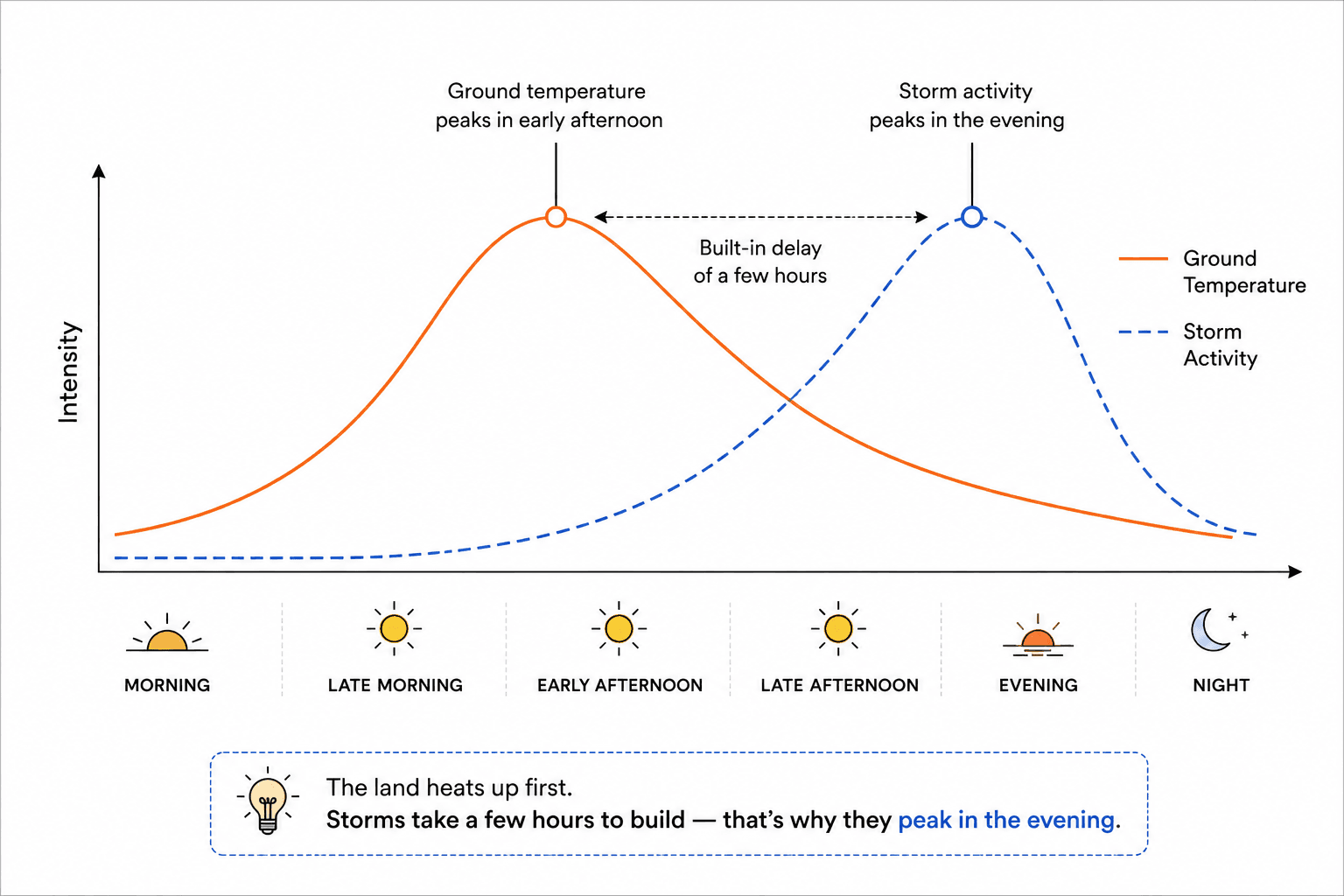
A storm cloud is not just growing; it is filling up like a balloon, getting closer and closer to bursting.
The timing does the rest. The ground reaches its hottest point in the early afternoon. But the storm cloud does not pop the moment the ground is hottest. It takes a couple more hours of that rising warm air to finish building the cloud to its full, towering height.
So the heating peaks in the afternoon, and the storm peaks a little later, usually late afternoon into the evening. There is a built-in delay between the sun doing its work and the sky letting go.
The moisture has to come from somewhere, too. Rivers, fields, forests, and damp soil release water vapour into the warm rising air all day long. That vapour is the fuel. Without it, you would just get hot rising air and a clear sky, no cloud, no storm. There would be nothing to turn into rain.
Put it all together and you get a sky that has spent the whole day loading up, finally reaching its breaking point right around dusk. This whole loaded-up, ready-to-burst state is what forecasters mean when they call the atmosphere unstable.
A thunderstorm breaks when the cloud simply cannot hold any more.
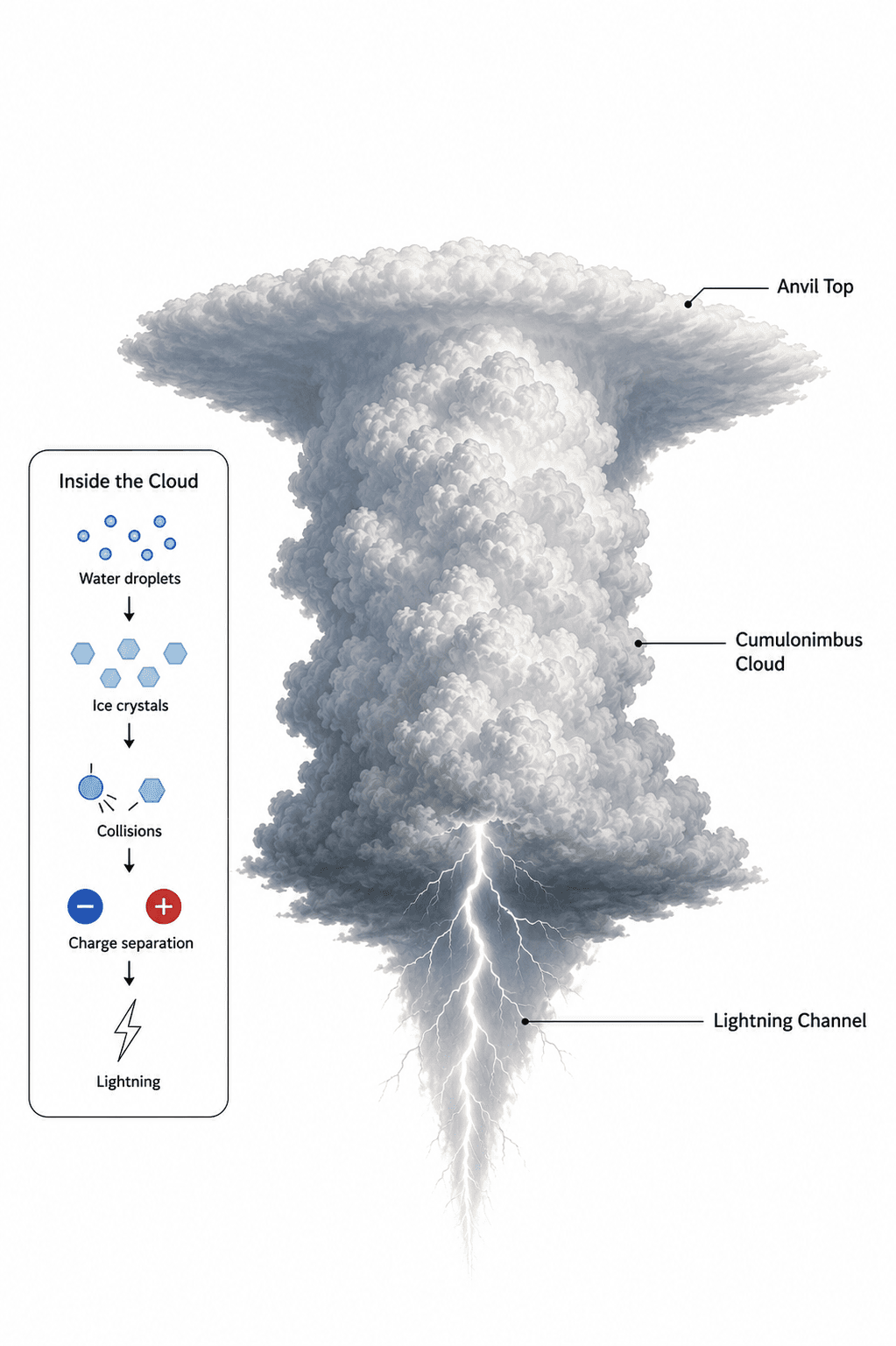
The trigger is weight. As the cloud grows, it fills with countless water droplets and even ice crystals high up where it is freezing cold. They bump together, clump up, and grow heavier and heavier. At some point, the rising air can no longer hold them up.
That is when everything comes crashing down: the heavy rain, the cold gusty wind, the lightning, and the thunder. The is sparks of electricity jumping inside the cloud; the thunder is just the sound that lightning makes. You have heard this exact delay when you count the seconds between a flash and the rumble.

A quick note on the different words people use:
And in the strongest evening storms, the rising and falling air can grow so violent that the droplets freeze into ice and fall as , those stinging little ice balls you sometimes get during a fierce pre-monsoon storm in north India.
Thunderstorms rarely last all night. Once the sun goes down, the whole thing runs in reverse.
The ground stops getting heat first. Without the sun, it begins to cool, and the warm rising air that fed the storm starts to fade. That invisible elevator of warm air switches off. With nothing left to lift moisture upward, the cloud can no longer rebuild itself. The rain falls out, the cloud thins, and the storm slowly dies down.
The fading is uneven, though. A really big storm can carry its own momentum and keep going for a while after sunset, especially if it has tapped into a fresh supply of moist air. But most ordinary afternoon storms run out of fuel within an hour or two of the sun going down.
So the next time you watch one roll in, you are really watching a daily rhythm. Heat building up through the day. The sky letting it all go by evening.

That clearing sky is classic rainbow weather: soft sunlight behind you, leftover rain ahead. We unpack rainbow formation — and why the sun must be behind you.
Both a thunderstorm and a gentle drizzle are made of the exact same stuff: clouds and water droplets. The difference is not what they are made of. It is how they form.
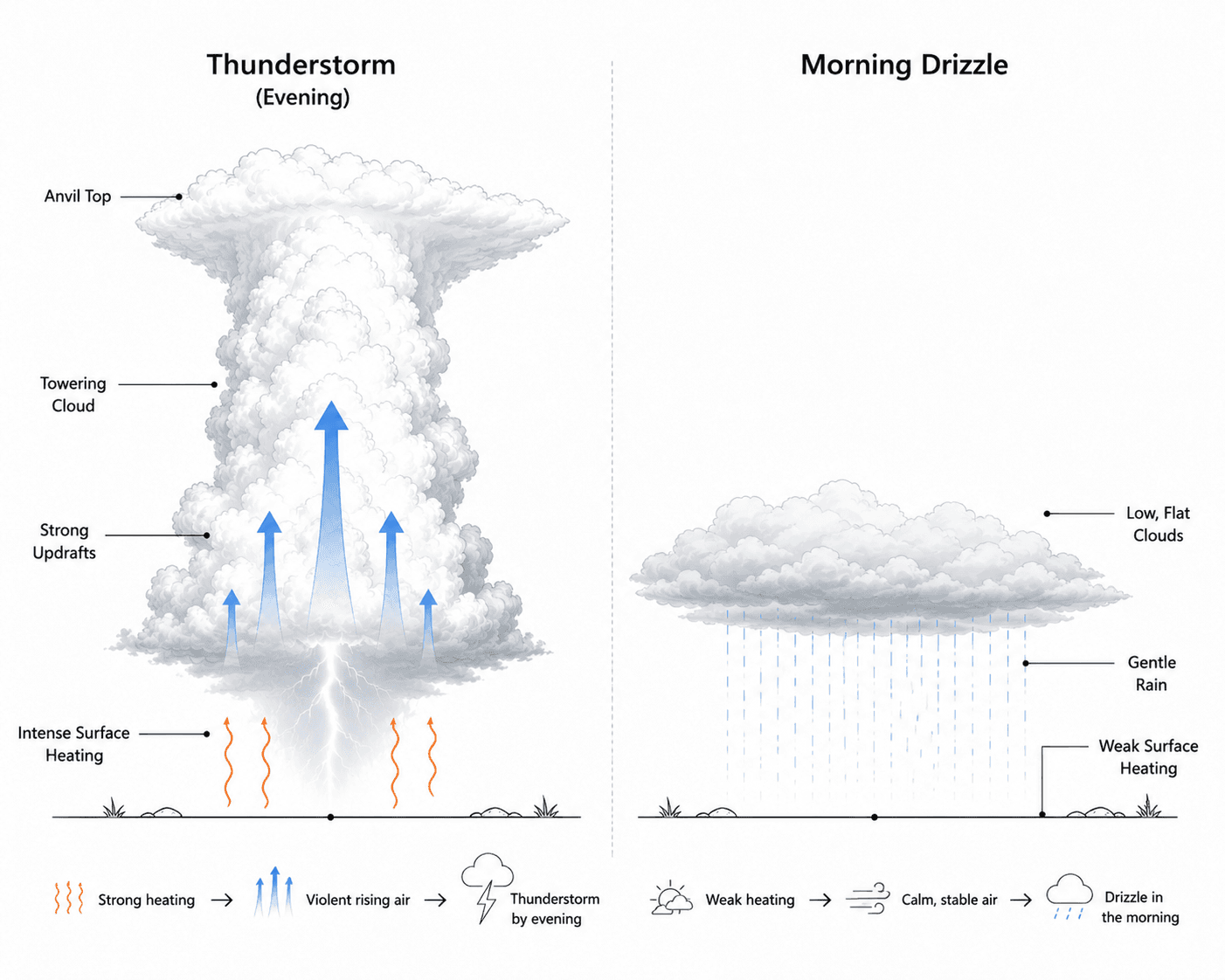
An evening thunderstorm is built by heat. The sun bakes the ground, warm air rushes upward, and a towering cloud grows in a single afternoon. It is fast, fierce, and short-lived, a hot-day story.
A morning drizzle is usually a calmer affair. It often comes from low, flat clouds that drifted in overnight or formed gently in the cool, still air. There is no violent rising heat behind it, so there is no thunder, no squall, no drama. Just soft, steady rain.
So on the very same day, you might get a quiet grey drizzle at dawn and a roaring storm at dusk. Same substance, two completely different stories. One is calm air gently letting go. The other is hot air rising in a fury and crashing back down.
Convectional rainfall happens when the sun strongly heats the ground, warm moist air rises, cools, and condenses into towering clouds that produce short, intense showers — often with thunder and lightning. Evening thunderstorms are the dramatic version of this process.
A cumulonimbus is a tall storm cloud built by strong upward convection. It can produce heavy rain, lightning, thunder, hail, and gusty winds — the classic thunderstorm cloud that often tops out with an anvil shape.
The sun spends all day heating the ground. Warm, moist air rises through convection, building a cumulonimbus cloud hour by hour. Ground temperature peaks in early afternoon, but the storm cloud needs a couple more hours to reach full height, so the break usually comes in late afternoon or evening.
Morning air is still cool from the night. The ground has not soaked up enough heat, so warm air is not rising strongly enough to build a tall storm cloud. Without that afternoon heat engine, there is no fuel for a thunderstorm.
Both are made of cloud and water droplets, but they form differently. Evening thunderstorms are built by daytime heat forcing air upward into a towering cumulonimbus cloud. Morning drizzle usually comes from low, flat clouds in cool still air, with no violent convection, thunder, or squall.
Once the sun goes down, the ground stops heating and begins to cool. The warm rising air that fed the storm switches off, so the cloud can no longer rebuild. Rain falls out, the cloud thins, and most ordinary storms die within an hour or two of sunset.