
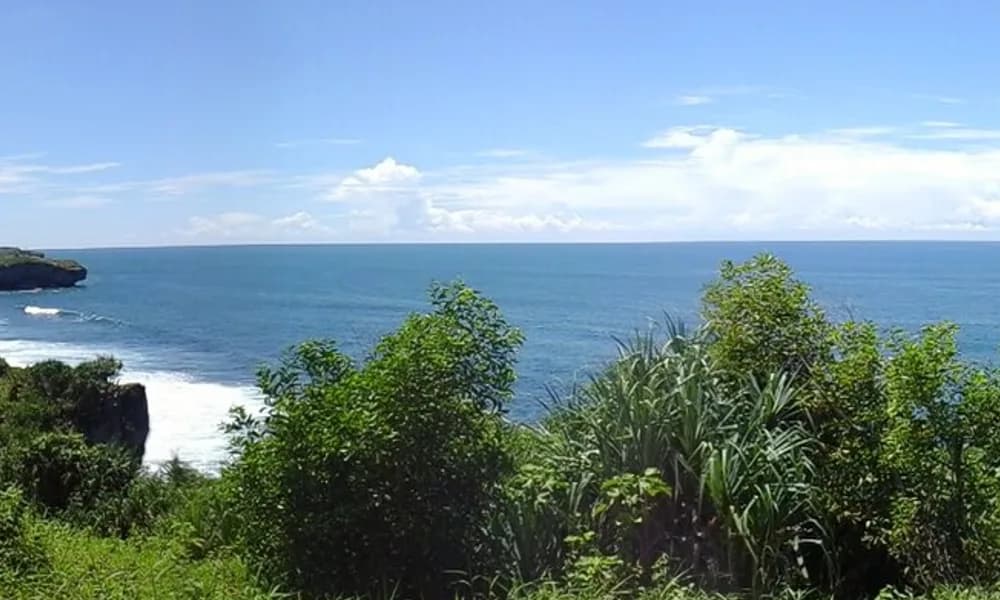
An M5.8 earthquake struck offshore Pacitan, East Java, on 6 February 2026. The mechanism was thrust on the Sunda subduction zone, where the Indo-Australian Plate dives beneath the Sunda Plate. One death was reported. The magnitude is modest next to a Tonga M7.5 or a Mindanao M7.8. The syllabus value is the setting. This is the same Java-facing megathrust that produced tsunamigenic earthquakes in 1994 and 2006. Thrust is the giveaway that you are looking at compression on a subduction interface, not a random crustal strike-slip jolt.
Key highlights
- Date: 6 February 2026.
- Magnitude: M5.8 (USGS-linked event record).
- Location: Offshore Pacitan, East Java, Indonesia.
- Mechanism: Thrust — the subduction-zone signature.
- Plate pair: Indo-Australian Plate beneath the Sunda Plate.
- Casualties: one death.
- Memory hook: same margin as the destructive Java tsunamis of 1994 and 2006.
- Contrast: Tonga (strong, too deep for a tsunami) and Mindanao (shallow thrust with regional warnings).
Where is Pacitan?
Pacitan is a regency on the Indian Ocean coast of East Java, Indonesia. The southern coast of Java faces the trench. The northern coast faces the Java Sea. For map questions, south Java plus “Indian Ocean offshore” is the correct side. Do not slide the pin to the north coast, to Bali, or to Sumatra unless the question names those places.
The event record places the epicentre at about 111.226° E, 8.787° S — longitude first, then latitude. In prose that is 8.79° S, 111.23° E, in the sea south of Pacitan. East Java’s southern districts (Pacitan, Trenggalek, and neighbours) sit on the overriding plate, a short distance landward of the trench. That is why a moderate offshore thrust is felt across a wide sweep of Java even when it does not empty the ocean onto the beach.
| Fact | Detail |
|---|---|
| Date | 6 February 2026 |
| Magnitude | M5.8 |
| Place | Offshore Pacitan, East Java |
| Coordinates (approx.) | 8.79° S, 111.23° E |
| Mechanism | Thrust |
| Plate setting | Indo-Australian Plate subducting beneath the Sunda Plate |
| Casualties | One death |
| Tsunami from this shock | Not a repeat of 1994 / 2006 |
| Historical twins on this margin | 1994 and 2006 tsunamigenic Java earthquakes |
The Sunda megathrust in one page
The Sunda subduction zone (also called the Sunda megathrust or, off Java, the Java Trench segment) is the long convergent boundary south and west of Indonesia. The Indo-Australian Plate — oceanic lithosphere in this sector — moves northward and slides beneath the Sunda Plate, which carries Sumatra, Java, and the shallow seas to the north. Melting above the slab feeds the Sunda volcanic arc: Krakatau, Merapi, Semeru, and the rest of the names that already sit in GS-1 notes.
Three geographic segments matter for current affairs, and they are not interchangeable.
| Segment | Facing ocean | Famous event type |
|---|---|---|
| Sumatra–Andaman | Indian Ocean / Bay of Bengal | 2004 megathrust and Indian Ocean tsunami |
| South Java (this article) | Indian Ocean | 1994 and 2006 Java tsunamis; Pacitan 2026 |
| Eastern Indonesia / Philippines | Pacific / marginal seas | Complex multi-plate collisions; Mindanao 2026 |
Pacitan belongs on the south Java row. Writing “2004-style tsunami at Pacitan in 2026” is the error the examiner wants. 2004 was a much larger rupture off Sumatra–Andaman. 2026 Pacitan is a moderate thrust on the Java segment. Same family of plate boundary; different size, different island, different outcome.
Convergence off Java is slightly slower than the Sumatra end, and the slab geometry changes along strike. None of that removes the hazard. A megathrust is a fault that can, in principle, host a great earthquake. Most years it hosts moderate ones instead. Pacitan 2026 is one of those moderate years. The trench does not become safe because one M5.8 stayed below the tsunami threshold.
Why thrust is the subduction giveaway
Faults slip in three basic ways.
| Mechanism | Motion | Typical plate setting |
|---|---|---|
| Normal | Hanging wall down | Extension — rifts, mid-ocean ridges |
| Strike-slip | Horizontal smear | Transform boundaries, some intra-plate faults |
| Thrust (reverse) | Hanging wall up | Compression — subduction zones and collisions |
A thrust earthquake means one block is driven over another. At a trench, that is the expected motion on the plate interface: the overriding plate is shoved up as the incoming plate slides down. When an agency reports “thrust-faulting on the Sunda subduction zone,” it is not adding colour. It is identifying the event as a megathrust-family shock.
That is the giveaway. If the mechanism had been strike-slip on a north–south fault inside Java, you would talk about a crustal fault and a different hazard model. Thrust plus offshore Pacitan plus Sunda equals subduction interface (or interface-adjacent) compression. For Prelims, the matching pair is: thrust : convergent boundary.
Thrust also explains why this margin can make tsunamis when the rupture is large and shallow. Vertical seafloor motion is built into the mechanism. Pacitan 2026 had the right mechanism and not the right size. The 1994 and 2006 Java events had both.
Deep-focus, intermediate, and shallow — where Pacitan sits
Use the same depth vocabulary as in the Sabah and Tonga notes, or the terms blur.
| Class | Depth | Pacitan’s place |
|---|---|---|
| Shallow | 0–70 km | This event — interface / upper-slab thrust |
| Intermediate | 70–300 km | Tonga M7.5 at ~230 km; Hindu Kush at ~188 km |
| Deep-focus | greater than 300 km | Sabah M7.1 at ~629 km |
Pacitan is the shallow row. That is why an M5.8 can still kill, and why the same zone can, on another day, throw a tsunami. Shallow plus thrust plus a populated coast is the dangerous combination. Deep-focus plus M7.1 under the sea off Sabah is the opposite combination: large number, little surface damage.
If a statement says “the Pacitan 2026 earthquake was deep-focus,” it is false. If it says “thrust earthquakes occur at mid-ocean ridges,” it is false. If it says “the Indo-Australian Plate subducts beneath the Sunda Plate south of Java,” it is true.
Java’s tsunami memory: 1994 and 2006
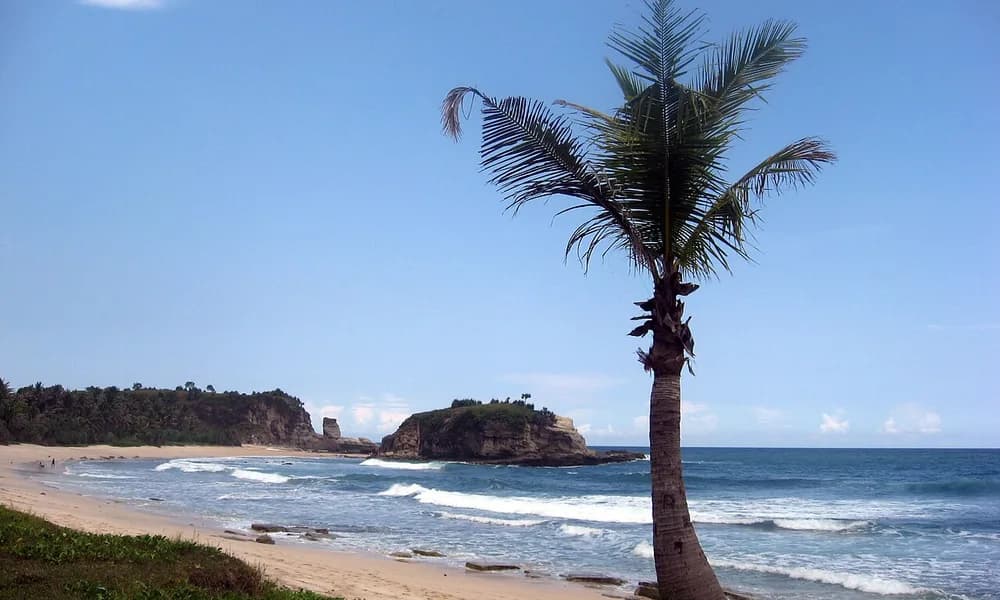
The event record is explicit: the same zone produced destructive tsunamigenic earthquakes in 1994 and 2006. Those two years are the revision pair. You do not need a new case study for each district. You need to know that south Java is not a quiet backwater of the Sunda system.
1994 — a large thrust on the Java Trench sent a tsunami onto East Java’s south coast. The lesson that entered textbooks is that a tsunami can be locally devastating even when the earthquake is not a Sumatra-scale M9.
2006 — another tsunamigenic thrust, felt along the south coast (Pangandaran and neighbouring districts). Again the wave, not only the shaking, did the killing.
2026 Pacitan — same plate pair, same thrust family, M5.8, one death, no replay of those tsunamis. The useful sentence is: the margin is capable; this rupture was not large enough. Indonesian authorities treat south Java as a megathrust coast in their public messaging for exactly this reason. A moderate year is not a closed chapter.
Do not inflate 2026 into 2006. Do not shrink 2006 into 2026. The years are the discriminator.
Why this shock did not become a tsunami headline
Three filters sit between a Java trench earthquake and a damaging wave.
- Magnitude / rupture area. A tsunami needs a large patch of seafloor to move. M5.8 is a local to regional shock, not a margin-wide rupture.
- Depth. The source must be shallow enough that the seafloor participates. Pacitan was in the shallow class, so this filter does not save you the way Tonga’s 230 km depth does.
- Mechanism. Thrust helps a tsunami; strike-slip rarely does. Pacitan had thrust, so this filter also does not dismiss the risk in general — it only says the 2026 rupture was the right type at the wrong size.
Put Tonga and Pacitan side by side and the filters swap. Tonga had magnitude and lacked shallow seafloor offset. Pacitan had shallow thrust and lacked magnitude. Mindanao had shallow thrust and M7.8, which is why tsunami warnings went out across the southern Philippines and neighbouring seas.
| 2026 event | Mechanism | Depth class | Tsunami logic |
|---|---|---|---|
| Pacitan, 6 February | Thrust, Sunda | Shallow | Right type, insufficient size |
| Tonga, 24 March | Slab event, Tonga Trench | Intermediate (~230 km) | Too deep to move the seafloor |
| Sabah, 22 February | Intraslab | Deep-focus (~629 km) | No seafloor offset |
| Mindanao, 8 June | Thrust | Shallow | Warnings issued |
One death, and why a “small” number still matters
One death is in the event record. That is not a rounding error to ignore. It is the human proof that shallow plus populated coast can kill below magnitude 6. Unreinforced masonry, night-time occurrence, and slope or coastal exposure turn a moderate shock into a fatality. Compare that with Sabah’s M7.1 at 629 km and little surface damage. The casualty ranking of 2026 does not follow the magnitude ranking.
For GS-3 (disaster management), Pacitan is a building-stock and preparedness note, not a tsunami-casualty note. Evacuation drills on Java’s south coast exist because of 1994 and 2006. They were not “wasted” because 2026 stayed small. The next rupture on this megathrust will not send a courtesy reminder first.
Why this matters for UPSC
Prelims. Lock the plate sentence: Indo-Australian Plate beneath the Sunda Plate. Lock the mechanism: thrust. Lock the place: Pacitan, East Java, Indian Ocean side. Lock the memory years: 1994 and 2006. A match-the-following that puts Pacitan on the Pacific coast of the Philippines is wrong; that is the Mindanao setting.
GS-1. Use Pacitan to explain why island arcs, trenches, and volcanoes travel together, and why Indonesia dominates global earthquake and eruption lists. The Sunda megathrust is the parent structure; Merapi is the volcanic child; Pacitan 2026 is a dated tremor on the parent.
GS-3. Two lines: (1) thrust + shallow + coast = tsunami potential, magnitude decides whether potential becomes a wave; (2) a single death at M5.8 is a reminder that risk is exposure, not only the Richter integer.
Stacking. Read this with the Places in News timeline, the Tonga intermediate case, the Sabah deep-focus case, the Hindu Kush India-felt intermediate case, and Mindanao for regional tsunami warnings. Five events, one depth-and-mechanism table.
Facts that are easy to mix up
Pacitan versus Sumatra 2004. Both are Sunda subduction. 2004 was a great megathrust off Sumatra–Andaman. Pacitan 2026 is a moderate Java-segment thrust. Do not write “Indian Ocean tsunami 2026” for this event.
M5.8 versus local agency magnitudes. Some first-day bulletins in Indonesia use a different magnitude on a different scale. The event record used here is M5.8. Stay with that number in answers unless a question quotes another agency and asks you to compare.
East Java versus Central or West Java. Pacitan is East Java’s south-west corner, adjoining Central Java. 2006 is more often associated with the Central/West Java south coast (Pangandaran). Keep the years and the districts from collapsing into “south Java, sometime.”
Thrust versus deep-focus. Thrust is a mechanism. Deep-focus is a depth class. Pacitan is thrust and shallow. Sabah is deep-focus. They are not synonyms.
Indo-Australian versus Pacific. South of Java the incoming plate is Indo-Australian. The Pacific Plate is the incoming plate at Tonga and along much of the eastern island arcs. Swapping those two plates is a frequent map error.
How to write a 30-second Mains insert
The Sunda megathrust is the convergent boundary where the Indo-Australian Plate subducts beneath the Sunda Plate south of Java and west of Sumatra. Thrust faulting is the characteristic mechanism. The 6 February 2026 M5.8 earthquake offshore Pacitan, East Java, was a shallow thrust on that margin and caused one death. It did not repeat the tsunamigenic Java earthquakes of 1994 and 2006, which occurred on the same zone at much larger size. The event is therefore a reminder of persistent megathrust hazard, not a new kind of tectonics.
Prelims snapshot
| Question type | Answer to lock |
|---|---|
| Date | 6 February 2026 |
| Magnitude | M5.8 |
| Place | Offshore Pacitan, East Java |
| Mechanism | Thrust |
| Incoming plate | Indo-Australian Plate |
| Overriding plate | Sunda Plate |
| Deaths | One |
| Historical tsunamis, same zone | 1994 and 2006 |
| Depth class | Shallow (not deep-focus) |
| Ocean | Indian Ocean (south coast of Java) |
Frequently asked questions
What was the Pacitan Java earthquake of 2026?
An M5.8 thrust earthquake on 6 February 2026, offshore Pacitan, East Java, on the Sunda subduction zone. One death was reported.
What is the Sunda megathrust?
The plate-boundary fault where the Indo-Australian Plate subducts beneath the Sunda Plate along Indonesia’s south-western and southern margin. It produced the 2004 Sumatra–Andaman disaster and, on the Java segment, the 1994 and 2006 tsunamis.
Why does thrust matter in an exam answer?
Thrust means compression: one block rides over another. That is the motion you expect at a convergent boundary. Naming thrust is how you show the Pacitan shock is a subduction event, not a ridge or transform event.
Did the 2026 Pacitan earthquake cause a tsunami?
It did not repeat the 1994 and 2006 Java tsunamis. The mechanism was the tsunami-capable type (shallow thrust), but the M5.8 rupture was too small to reproduce those waves.
How is this different from the Tonga and Sabah earthquakes of 2026?
Tonga was M7.5 at about 230 km (intermediate) — strong, no fatalities, no tsunami because it was too deep. Sabah was M7.1 at about 629 km (deep-focus) — little surface damage. Pacitan was smaller, shallow, and still deadly for one person.
What should UPSC aspirants remember?
Pacitan, East Java, 6 February 2026, M5.8, thrust, Indo-Australian under Sunda, one death, same zone as 1994 and 2006. Pair with Mindanao for a larger shallow thrust that did trigger tsunami warnings, and with Hindu Kush for the India-felt intermediate contrast.
Is Pacitan on the Pacific Ring of Fire?
Indonesia is on the Ring of Fire. South Java’s trench, however, faces the Indian Ocean, and the incoming plate is Indo-Australian, not the Pacific Plate. Use “Sunda subduction / Ring of Fire” for the country; use the plate names for the mechanism.
Sources
- Event parameters as recorded on the Places in News timeline (USGS-linked compilation): M5.8, 6 February 2026, thrust, Sunda subduction, one death, 1994 and 2006 tsunamigenic predecessors
- USGS Earthquake Hazards Program
- Related explainers: Tonga earthquake 2026, Sabah Malaysia earthquake 2026, Hindu Kush earthquake felt in India, Mindanao earthquake 2026