
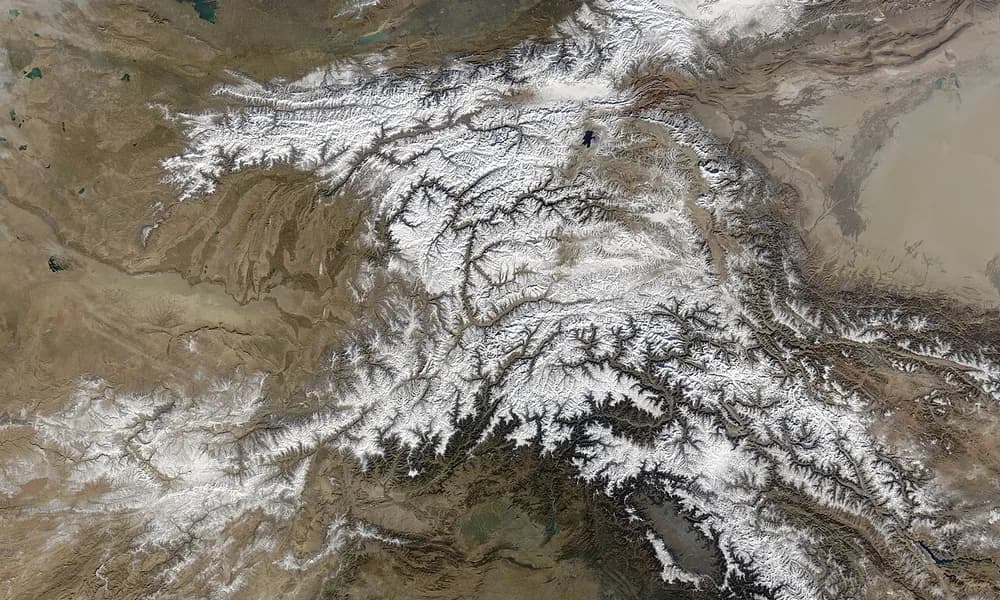
On 3 April 2026 at 20:42 Afghanistan Time (16:12 UTC), a moment magnitude 5.8 earthquake struck the Hindu Kush about 35 km south of Jorm (also spelled Jurm) in Badakhshan, northeastern Afghanistan. The USGS hypocentre was 188 km deep — an intermediate-depth shock inside the India–Eurasia collision zone, not a shallow crustal break on the Himalayan front. Twelve people were killed and six were injured. It was the deadliest earthquake of 2026 as of that date. Tremors were an earthquake felt in India: Delhi-NCR, Jammu and Kashmir, and Punjab reported shaking, as did Islamabad and Gilgit-Baltistan.
That combination — moderate magnitude, large felt area, deaths far from a “great” earthquake — is why Hindu Kush events are a standing Hindu Kush earthquake UPSC theme. Aspirants who only revise the Himalayan Main Frontal Thrust miss the slab that dives under Afghanistan and still rings phones in Delhi.
Key highlights
- Date and time: 3 April 2026, 20:42 AFT / 16:12 UTC.
- Magnitude and depth: USGS Mw 5.8 at ~188 km (intermediate-depth).
- Place: Hindu Kush, ~35 km south of Jorm / Jurm, Badakhshan, Afghanistan.
- Casualties: 12 killed, 6 injured — deadliest earthquake of 2026 as of 3 April.
- Felt area: Northern Pakistan and northern India, including Delhi-NCR, Jammu and Kashmir, and Punjab.
- Tectonics: Intermediate-depth Hindu Kush nest; Indian slab under Eurasia; not a shallow Himalayan rupture.
- Exam hook: Why an earthquake felt in India can have an Afghan epicentre — depth and slab geometry, not a fault under Connaught Place.
- USGS catalog: M 5.8 — 35 km S of Jurm, Afghanistan.
Where is Jorm, and what is the Hindu Kush?
Jorm (Jurm) is a town in Badakhshan Province, in the high northeast of Afghanistan, toward the Wakhan and the Tajik frontier. The Hindu Kush is the mountain system that runs across northeastern Afghanistan into northern Pakistan. It is not a Himalayan range, though it belongs to the same India–Eurasia collision orogeny. For a map question, pin it west-northwest of the Karakoram, north of the Kabul basin, and well outside India’s borders.
USGS coordinates are 36.548° N, 70.852° E — the same pair used on the Places in News card. Maximum reported intensity was only MMI III (Weak) over a very large area. Weak intensity plus a death toll is not a contradiction: most of the 16 million people who felt MMI II–III were never in danger; a few vulnerable houses, including a collapse near Kabul, were.
| Fact | Detail |
|---|---|
| Date | 3 April 2026 |
| Origin time | 16:12 UTC / 20:42 AFT |
| USGS magnitude / depth | Mw 5.8 / 188 km |
| Location | ~35 km south of Jorm (Jurm), Badakhshan |
| Coordinates | 36.548° N, 70.852° E |
| Seismic zone | Hindu Kush intermediate-depth nest |
| Plate setting | India–Eurasia collision; Indian slab at depth |
| Depth class | Intermediate (70–300 km) |
| Casualties | 12 deaths; 6 injuries |
| Felt in India | Delhi-NCR, Jammu and Kashmir, Punjab |
| Also felt | North Pakistan, Islamabad, Gilgit-Baltistan, Tajikistan |
| Max intensity | MMI III (Weak) |
| 2026 rank (as of 3 April) | Deadliest earthquake of the year to that date |
Spellings: Jorm and Jurm are the same place. Hindu Kush is the range. Badakhshan is the Afghan province. Do not relocate the epicentre to Kashmir, the Hindu Kush Himalaya (HKH) programme region as a whole, or the Delhi Ridge.
Why was this earthquake felt in India?
This is the question that sends Indian search traffic to a Hindu Kush file, and it has a physical answer.
1. Intermediate depth enlarges the felt radius. A shallow M5.8 under a single district dies out quickly. At ~188 km, the source sits in the upper mantle. Body waves travel a long path before they reach the free surface. Geometric spreading still weakens them, but they illuminate a wide footprint at low intensity instead of a tight, violent bullseye. That is why an earthquake felt in India, Pakistan, and Tajikistan can share one Afghan hypocentre.
2. The Indian plate is the slab. The Hindu Kush nest is not a random deep crack in Eurasian crust. Seismological work treats these 170–280 km reverse-faulting earthquakes as sourced inside the Indian plate as it descends almost vertically under the Hindu Kush and begins to stretch, tear, and, in some models, detach. When that slab fails, the Indian lithosphere is both the source region and part of the waveguide toward the subcontinent. Delhi is not next to Jorm on a road map; it is on the same colliding plate.
3. North Indian alluvium and tall buildings report “felt” easily. MMI III is weak shaking — hanging objects, a sway in upper storeys, a pause in a metro coach. The Indo-Gangetic alluvium under Delhi-NCR and Punjab can make that sway more noticeable than the same wave on hard rock. Felt reports from the capital are therefore common for Hindu Kush events and do not mean a fault ruptured under the city.
4. Contrast with shallow Himalayan ruptures. A shallow earthquake on the Main Himalayan Thrust or a Himalayan frontal fault puts energy into the near-surface crust. Damage concentrates within tens of kilometres of the epicentre; high-frequency shaking wrecks masonry. The 2026 Jorm event did the opposite: low-to-moderate shaking over a very large area, with deaths tied to specific vulnerable buildings (including a house collapse near Kabul that killed eight members of one family) rather than to a destroyed epicentral town. If a Prelims statement says “earthquakes felt in Delhi always originate in the Himalaya,” it is false.
Put in one exam line: Hindu Kush intermediate-depth earthquakes are routinely felt in northern India because a deep source in the Indian slab radiates a wide, weak wavefield; shallow Himalayan ruptures are more damaging locally and are a different fault class.
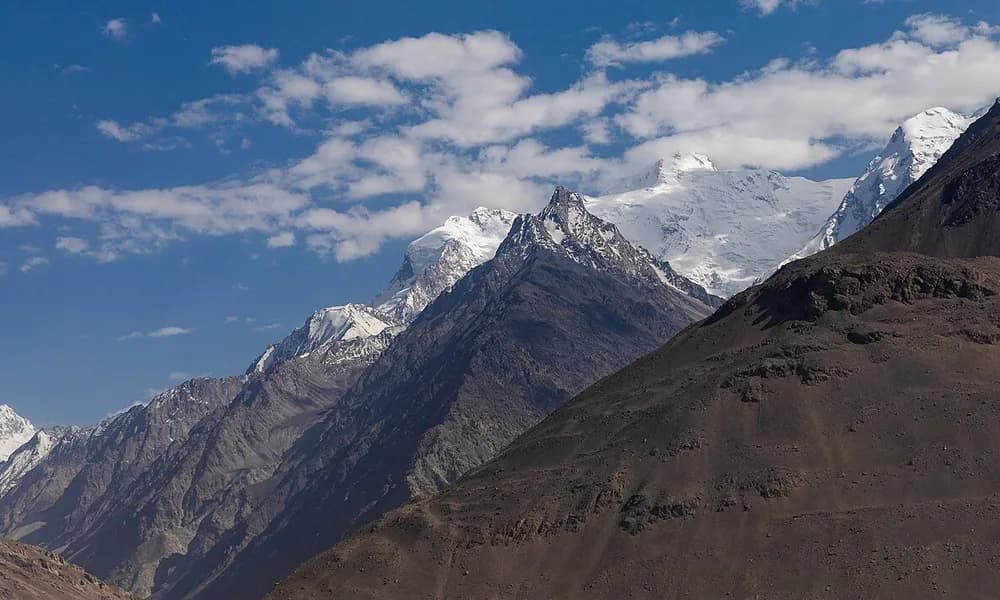
Intermediate-depth, not “deep-focus”
School tables split earthquakes by depth:
| Class | Depth | 2026 example |
|---|---|---|
| Shallow | 0–70 km | Sanriku / Japan Trench M7.4; North Maluku M7.4 |
| Intermediate | 70–300 km | Jorm, Hindu Kush, 188 km; Tonga M7.5, ~230 km |
| Deep-focus | 300–700 km | Sabah, Malaysia, M7.1, ~629 km |
Calling Jorm a “deep earthquake” in casual speech is understandable; in a UPSC answer it is sloppy. Deep-focus is the Sabah contrast the timeline is built for: a large magnitude, almost no surface damage, source in a sinking slab far below 300 km. Intermediate-depth is the Hindu Kush specialty. The nest has produced M7-class events (for example 26 October 2015, Mw 7.5, around 210 km, widely felt in India, with hundreds of deaths in Afghanistan and Pakistan). 2026 was smaller (M5.8) and still lethal because of housing, not because the magnitude was “great.”
The Hindu Kush nest is one of the few places on Earth with frequent intermediate-depth earthquakes away from a classic oceanic trench. Japan and Tonga have Benioff zones under a trench-arc system. Hindu Kush has a continental collision slab — the Indian plate after it has already closed the Tethys and built the Himalaya–Karakoram–Hindu Kush wall. That is the link to Himalayan orogeny in the exam angle: same collision, different depth and different surface faults.
Shallower Afghan earthquakes exist too. The Chaman Fault system is a north–south, right-lateral strike-slip zone that takes up oblique India–Eurasia motion in the west. Those shocks are a different current-affairs family (shallow, sometimes very destructive, as in parts of 2022–25 Afghan sequences). Jorm 2026 is not a Chaman Fault event.
What the 3 April shock did on the ground
Twelve deaths and four of the six injuries were in Afghanistan; two people were injured in Khyber Pakhtunkhwa, Pakistan. Five homes collapsed and 33 were damaged across six Afghan provinces, affecting about 40 families. Eight of the dead were one family in a collapse near Kabul; a three-year-old from that household was injured. The epicentre’s remoteness delayed a full count — a recurring operational fact in Badakhshan reporting, not an excuse to invent a higher toll.
In Peshawar, the Kapoor Haveli (the ancestral mansion associated with Raj Kapoor) partially collapsed amid shaking and heavy rain. That is a cultural footnote, not a seismological one; do not promote it to “the earthquake destroyed Peshawar.”
India announced an aid package on 5 April — kitchen sets, hygiene kits, blankets, and other relief — for victims of the earthquake and of recent floods. That is a GS-2 (neighbourhood / humanitarian assistance) line if a Mains question wants a contemporary example. It does not change the geology.
No tsunami is relevant. This was an inland, intermediate-depth continental event. Anyone pairing it with the Japan Sanriku tsunami or the North Maluku waves is mixing settings.
India–Eurasia collision in one page
Since the Indian plate left Gondwana and closed the Tethys, it has been driving north into Eurasia. The visible products are the Himalaya, the Tibetan Plateau, the Karakoram, and the Hindu Kush. Strain is partitioned:
- Frontal Himalaya: shallow to upper-crustal thrust on the Main Himalayan Thrust and related faults — the earthquakes that threaten the Gangetic plains at high intensity if a great rupture occurs.
- Indus–Tsangbo and Tibetan systems: strike-slip and normal faulting on the plateau.
- Western syntaxis / Hindu Kush–Pamir: a contorted slab at depth, producing the intermediate-depth nest.
- Chaman and related faults: oblique strike-slip on the western edge of the Indian plate.
Jorm 2026 sits in the third of those. A Mains diagram that only shows arrows under Nepal is incomplete for “earthquake felt in India” items. Delhi can shake from (a) a local basement/alluvial site effect on a distant Hindu Kush shock, (b) a Himalayan rupture, or (c) a rare local Delhi–Haridwar ridge / hidden thrust event. 3 April 2026 was (a).
The phrase Hindu Kush Himalaya (HKH) in environment reports is an ICIMOD regional label covering mountains from Afghanistan to Myanmar. It is not a plate name and not a synonym for this hypocentre. Use Hindu Kush for the earthquake; use HKH only if the question is about the mountain development region.
Why this matters for UPSC
Among 2026 world earthquakes, this one has the highest India search intent: people type “earthquake felt in India” and “Delhi tremors” before they type “Badakhshan.” The Hindu Kush earthquake UPSC file is how you convert that search into a geography answer.
Prelims. Match-the-following: Jorm / Jurm — Badakhshan — Afghanistan — Hindu Kush — intermediate depth. Statement questions: “Earthquakes felt in Delhi must have epicentres in India” (false); “Hindu Kush earthquakes are typically shallow crustal Himalayan thrusts” (false); “Intermediate-depth means 70–300 km” (true). Contrast Sabah deep-focus and Japan / North Maluku shallow thrusts.
GS-1. Use Jorm to explain collision-zone seismicity beyond the Himalayan arc, slab geometry, and why magnitude is a poor proxy for felt area.
GS-3. Building vulnerability: an MMI III field still killed 12 because of collapse-prone housing. Disaster risk is construction plus depth plus population, not Richter headlines.
GS-2. India’s 5 April relief is a thin but usable neighbour-policy example. Do not inflate it into a strategic essay.
Current affairs stacking. On 3 April 2026 this was the year’s deadliest quake. Later, the Venezuela doublet (June) became the deadliest of the year by a very large margin. Keep the qualifier “as of 3 April / deadliest of 2026 so far at that date.”
This explainer is the long form of the Places in News card hindukush-jorm-eq-2026.
Facts that are easy to mix up
Felt in India versus originated in India. The epicentre is in Afghanistan. “Earthquake felt in India” is a felt-report phrase, not a location of rupture.
Jorm versus Kashmir. Badakhshan is Afghan. Do not slide the pin into Kupwara or Gilgit because those places also shook.
Intermediate versus deep-focus. 188 km is intermediate. Sabah at ~629 km is deep-focus. Tonga at ~230 km is still intermediate.
M5.8 versus “small, therefore harmless.” Magnitude 5.8 is moderate. Twelve deaths make it the 2026 fatality leader until later disasters. Energy is not the same as risk.
Hindu Kush versus Himalaya versus Karakoram. Three ranges, one collision. The nest that routinely shakes Delhi from afar is the Hindu Kush intermediate-depth zone.
2015 versus 2026. October 2015 was M7.5 and far more lethal. 2026 is M5.8 / 12 dead. Do not paste 2015 casualty figures into this note.
Deadliest of 2026 — timestamp. True on 3 April. Not true after the June Venezuela earthquakes. Write the date into the superlative.
Prelims snapshot
| Question type | Answer to lock |
|---|---|
| Date | 3 April 2026 |
| Magnitude / depth | M5.8 / ~188 km |
| Place | Near Jorm (Jurm), Badakhshan, Afghanistan |
| Range | Hindu Kush |
| Depth class | Intermediate |
| Plate story | India–Eurasia collision; Indian slab |
| Why felt in India | Deep source, wide weak wavefield, north Indian sites |
| Contrast | Shallow Himalayan thrusts; Sabah deep-focus |
| Deaths | 12 (deadliest of 2026 as of that date) |
| India origin? | No |
Frequently asked questions
Why was the Hindu Kush earthquake felt in India?
The 3 April 2026 Jorm earthquake was 188 km deep. Intermediate-depth sources in the Indian slab under the Hindu Kush send a wide, usually weak wavefield into Pakistan and northern India. Delhi-NCR, Jammu and Kashmir, and Punjab reported an earthquake felt in India even though the epicentre was in Badakhshan, Afghanistan.
Where was the 2026 Hindu Kush (Jorm) earthquake?
About 35 km south of Jorm / Jurm in Badakhshan Province, Afghanistan, at 36.548° N, 70.852° E, in the Hindu Kush intermediate-depth seismic zone.
How many people died in the Jorm earthquake?
Twelve people were killed and six were injured. Eight of the dead were one family in a house collapse near Kabul. As of 3 April 2026 it was the deadliest earthquake of the year.
Is a Hindu Kush earthquake the same as a Himalayan earthquake?
No. Both belong to the India–Eurasia collision, but Himalayan damaging earthquakes are typically shallow thrusts on the Main Himalayan Thrust and related faults. Hindu Kush nest events are intermediate-depth failures in the descending Indian slab under Afghanistan.
What is the Hindu Kush earthquake UPSC angle?
Location (Badakhshan / Jorm), depth class (intermediate, ~188 km), plate setting (India–Eurasia; Indian slab), why Delhi feels such shocks, and the contrast with shallow Himalayan ruptures and with deep-focus events such as Sabah 2026.
Did the 2026 Hindu Kush earthquake cause a tsunami?
No. It was an inland, intermediate-depth continental earthquake. Tsunami risk belongs to shallow offshore thrusts such as Sanriku and North Maluku.
Was the epicentre in India?
No. The USGS epicentre is in Afghanistan. India appears in the story as a felt region and, on 5 April, as a relief donor.
Sources
- USGS — M 5.8, 35 km S of Jurm, Afghanistan
- Contemporary reports of felt shaking in Delhi-NCR and northern India (3 April 2026)
- Places in News timeline
- Related explainers: Japan Sanriku earthquake 2026, North Maluku earthquake 2026, Sabah Malaysia earthquake 2026 (deep-focus contrast), Tonga earthquake 2026