
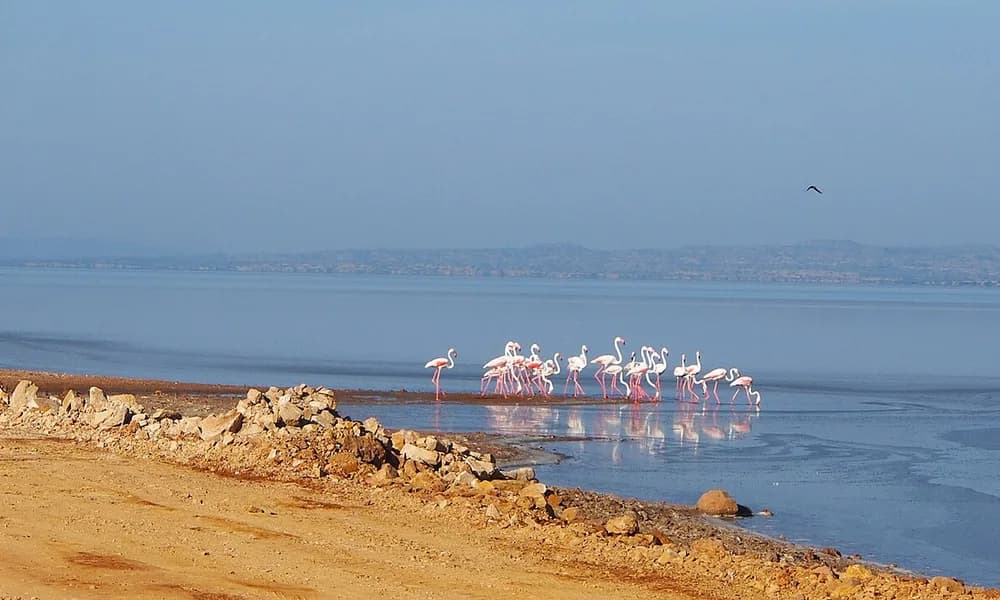
Chhari-Dhand (also written Chhari-Dhandh or Chari-Dhand) is a seasonal saline wetland in Kutch district, Gujarat, on the edge of the Banni grasslands and the salt flats of the Rann of Kutch. On 31 January 2026, Union Environment Minister Bhupender Yadav announced its designation as a Wetland of International Importance under the Ramsar Convention, together with Patna Bird Sanctuary in Etah. Chhari-Dhand is India’s 98th Ramsar site and Gujarat’s fifth. It is also Gujarat’s first Conservation Reserve (notified in August 2008) and the first Ramsar site in the Kutch region. The wetland is a western stopover on the Central Asian Flyway, known for cranes and flamingos.
Key highlights
- Announcement date: 31 January 2026 — India’s 98th Ramsar site; Gujarat’s fifth; first in Kutch.
- Location: Kutch (Kachchh) district, Gujarat, between Banni grasslands and the Rann salt flats.
- Type: Seasonal saline / desert-fringe wetland that floods in a good monsoon.
- Area of the Ramsar site: about 22,700 hectares, covering 12 villages (The Hindu).
- Domestic status: Conservation Reserve under the Wildlife (Protection) Act, 1972 (August 2008).
- Exam hook: A desert/saline Ramsar site, not a Gangetic marsh; pair with Banni, the Rann, and cranes/flamingos.
- Colour fact (do not overclaim): the Chir Batti lights reported on the Banni–Rann flats after sunset.
- Official sources: PIB, 31 January 2026; News on AIR; The Hindu, 7 February 2026.
Where is Chhari-Dhand?
Chhari-Dhand lies in the arid west of Gujarat, in Kutch, where three landscapes meet: tropical thorn country, the Banni grassland mosaic, and the seasonal salt marsh of the Rann. In local usage, chhari points to salt-affected ground and dhand (a Sindhi word) to a shallow, saucer-shaped wetland. The basin fills from monsoon rain and from north-flowing seasonal streams. In a dry year it can shrink to scattered pools. In a good monsoon it becomes a wide, shallow sheet of water.
That setting is the opposite of Patna Bird Sanctuary, announced the same day. Patna is a small freshwater marsh in the Ganga–Yamuna doab. Chhari-Dhand is a large saline basin on a desert fringe. If a Prelims item gives you one saline wetland and one Gangetic bird sanctuary from January 2026, this is the pair.
| Fact | Detail |
|---|---|
| Official / local names | Chhari-Dhand, Chhari-Dhandh, Chari-Dhand |
| State / district | Gujarat / Kutch (Kachchh) |
| Coordinates (approx.) | 23.85° N, 69.70° E |
| Ramsar area | ~22,700 ha (about 227 km²) |
| Setting | Between Banni grasslands and the Rann of Kutch |
| Wetland type | Seasonal saline / desert wetland |
| Domestic status | Conservation Reserve (August 2008) |
| Announced by | Union MoEFCC minister Bhupender Yadav |
| India’s Ramsar rank | 98th site (Gujarat’s 5th; first in Kutch) |
| Flyway | Central Asian Flyway (western Indian wintering ground) |
Aspirants should keep Kutch, saline, and Conservation Reserve as a triad. A question that calls Chhari-Dhand a national park, or that places it in the Little Rann as a Wild Ass Sanctuary, is mixing two different Kutch conservation stories.
What is a Ramsar site?
A Ramsar site is a wetland placed on the List of Wetlands of International Importance under the Ramsar Convention, adopted in 1971 in Ramsar, Iran. India became a Contracting Party on 1 February 1982. The listing does not replace Indian wildlife law. It records that the site meets at least one of nine ecological criteria and that the country will try to maintain its ecological character.
Most Indian Ramsar sites that UPSC candidates first memorise are freshwater: Chilika, Loktak, Keoladeo, the Gangetic bird sanctuaries. Chhari-Dhand is useful because it forces a wider definition of “wetland”. The Convention covers marshes, peatlands, floodplains, mangroves, coral reefs, and saline or brackish systems. A seasonal salt basin in Kutch is as eligible as an oxbow in Uttar Pradesh if the birds and the ecology justify it.
Wise use, the Convention’s working idea, is harder in a pastoral desert landscape than in a fenced sanctuary. Water is seasonal. Grazing, salt, and migration routes already structure the land. The 2008 Conservation Reserve was meant to keep people in the picture rather than to create a fortress. Ramsar adds an international reporting layer on top of that.
Why Chhari-Dhand was listed
The Ramsar secretariat note, reported by The Indian Express, called the site an important wintering ground for waterfowl. It named the critically endangered sociable lapwing, the vulnerable common pochard, and about 30,000 common cranes (Grus grus) annually. Those three facts are enough for a Prelims line. They also explain the listing: a desert-fringe wetland that regularly holds a globally significant crane congregation, plus threatened species, meets the Convention’s waterbird tests.
The Hindu’s follow-up from Gandhinagar, after the state forest minister presented the Ramsar certificate to the chief minister, added landscape-scale numbers that candidates should keep separate from the secretariat’s crane figure. Surveys in the Banni wetlands have recorded over 50,000 waterbirds, including more than 40,000 cranes at a single site. Around 283 bird species have been documented in and around Chhari-Dhand, including 11 globally threatened and nine Near Threatened species. Inside the reserve, officials cited 187 bird species — over 35 per cent of Gujarat’s bird diversity — and a April 2025 sighting of 500–600 Grey Hypocolius, a species that is scarce in India and is often treated as a Kutch speciality.
Greater and lesser flamingos use the wider Rann. PIB, describing both January listings together, also mentioned chinkara, wolves, caracal, desert cats and desert foxes. Those mammals belong to this arid mosaic, not to Etah.
Do not treat every large number as a count inside the Ramsar boundary on a single day. The 22,700-hectare figure is the designated landscape, spanning 12 villages. The 80-square-kilometre figure that appears in older notes is a water-spread estimate in a good monsoon, not a rival official area. For exam answers, use 22,700 ha unless a later Ramsar Information Sheet revises it.
Banni, the Rann, and a Conservation Reserve
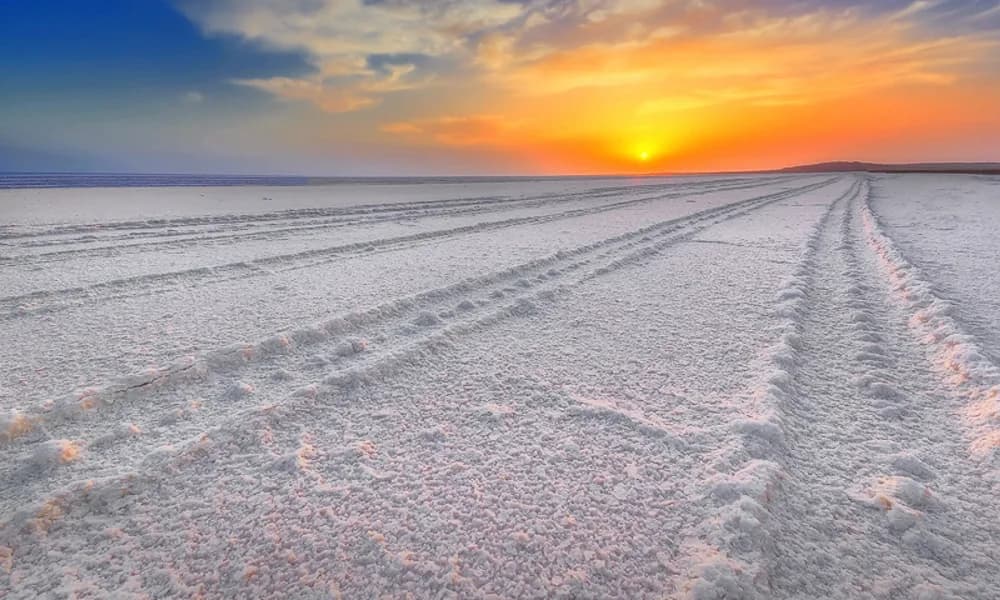
Banni is one of India’s largest grassland tracts, a seasonal mosaic of grass, scrub and wetland on the edge of the Great Rann. Pastoral communities have used it for generations. The Rann of Kutch is a vast seasonal salt marsh that floods in the monsoon and dries to a white pan in the winter. Chhari-Dhand sits between those two systems. That is why the site is described as a desert wetland even though it can look like a lake after rain.
In August 2008, Gujarat notified Chhari-Dhand as a Conservation Reserve under the Wildlife (Protection) Act, 1972 — the state’s first use of that category. A Conservation Reserve is not a national park. It is a category meant for landscapes of conservation value, often with community use, typically as a buffer or as a habitat that does not fit a stricter notification. At the time of the Ramsar announcement, reporting still described it as Gujarat’s only Conservation Reserve. Do not upgrade it to a sanctuary or a national park in an answer.
Gujarat’s earlier Ramsar sites were Nalsarovar (2012), Thol Lake Wildlife Sanctuary and Wadhvana Wetland (both 2021), and Khijadia Wildlife Sanctuary (2021). Chhari-Dhand is the fifth, and the first in Kutch. Nalsarovar is a freshwater lake system near Ahmedabad. Thol and Wadhvana are inland wetlands in central Gujarat. Khijadia is a coastal wetland near Jamnagar. None of those is a Banni–Rann saline basin. That is the comparative point for Mains.
Chir Batti: exam colour, not a scientific claim
Chir Batti (sometimes glossed as “ghost lights”) is the name given to unexplained moving lights reported after sunset on the Banni grasslands and the Rann flats. The phenomenon turns up in travel writing and in occasional Prelims trivia about Kutch. It is not a Ramsar criterion, and it is not a proven unique property of the designated wetland.
Use it as colour if a question or a revision note already links Banni with mysterious lights. Do not write that Ramsar listed Chhari-Dhand because of Chir Batti. Do not invent a physical explanation. The listing rests on birds, habitat type, and flyway function.
India’s Ramsar tally and the 2026 sequence
The January pair is the first rung of a 2026 sequence that later reached 101:
| Year / milestone | India’s Ramsar count |
|---|---|
| 2014 | 26 |
| World Wetlands Day window, 31 January 2026 | 98, after Patna Bird Sanctuary (97th) and Chhari-Dhand (98th) |
| Earth Day, 22 April 2026 | 99, Shekha Jheel |
| World Environment Day, 5 June 2026 | 100, Surha Tal |
| 3 August 2026 | 101, Glaw Lake |
PIB quoted the minister’s line that the network had expanded by over 276 per cent from 26 sites in 2014 to 98. India has been a party since 1982. By mid-2026 it had the highest number of Ramsar sites in Asia. Count is not condition. Invasive species and hydrological change affect many listed wetlands. New Indian Express reporting at the time of the announcement also flagged pressure from invasive species and visitors at both new sites.
For Mains GS-3, the argument that is specific to Chhari-Dhand is this: India is not only listing familiar Gangetic bird sanctuaries. It is also putting a seasonal saline desert wetland on the global list, in a landscape where pastoral use, salt, and migration already define the ecology. Governance here is a Conservation Reserve plus Ramsar reporting, not a classic national-park model.
Montreux Record remains a separate Prelims fact. Chhari-Dhand is a new listing, not a Montreux site.
Why this matters for UPSC
Environment questions reward a precise map fact plus a category fact. Chhari-Dhand supplies both.
Prelims. Lock state (Gujarat), district (Kutch), rank (98th), type (seasonal saline / desert wetland), and domestic status (Conservation Reserve, 2008). Pair it with Patna the same day: freshwater Etah versus saline Kutch. Flyway (Central Asian), flagship birds (common crane, flamingos, Grey Hypocolius, sociable lapwing), and the Banni–Rann setting are the usual extras. A trap that places the site in Rajasthan’s desert, or that calls it the Wild Ass Sanctuary, is plausible.
GS-3 / GS-1. A short paragraph can use the site to show: (a) wetlands include saline and seasonal systems; (b) Conservation Reserve as a people-inclusive category; (c) grassland–desert–wetland ecotones; (d) India’s post-2014 Ramsar expansion reaching arid western India.
Geography. Place Kutch on the western margin of India, north of the Gulf of Kutch, adjoining Pakistan’s Sindh. Distinguish the Great Rann, the Little Rann (Wild Ass Sanctuary), and Banni. Chhari-Dhand is on the Banni–Great Rann edge, not inside the Little Rann.
Current affairs stacking. One table for the January pair, then Shekha, Surha Tal, and Glaw. Do not revise Chhari-Dhand in isolation from Patna; the announcement was a double listing.
This explainer sits alongside the Places in News timeline, which logs the same designation as a geography event.
Facts that are easy to mix up
98th versus 97th. Chhari-Dhand is the 98th. Patna Bird Sanctuary is the 97th. Together they made 98.
Announcement date versus secretariat date. Government and news coverage use 31 January 2026. National listings also record a Ramsar designation date of 16 June 2025 (site number 2588 in secondary lists). Treat those as file date versus public announcement, not as two different sites.
Area. Use 22,700 hectares. The ~80 km² figure is a water-spread estimate, not a replacement for the designated area.
First in Gujarat versus fifth in Gujarat. It is the first in Kutch and Gujarat’s fifth Ramsar site. Nalsarovar was the state’s first Ramsar wetland.
Only Conservation Reserve. It was Gujarat’s first Conservation Reserve (2008). Reporting at listing time still called it the state’s only one. Do not turn that into “India’s only Conservation Reserve”.
Wild Ass Sanctuary. That is the Little Rann. Different place, different species story (Indian wild ass). Do not merge the two.
Chir Batti. Regional folklore and travel colour. Not a listing criterion.
How designation works in India
States propose wetlands through their wetland authorities. MoEFCC vets the Ramsar Information Sheet and sends it to the Ramsar Secretariat in Gland, Switzerland. The Secretariat publishes the site when the data and maps meet Conference of the Parties standards. Ministers often announce on a calendar hook. Chhari-Dhand and Patna were announced ahead of World Wetlands Day (2 February).
In February 2026 the Gujarat forest minister presented the certificate in Gandhinagar. That state ceremony is not a second designation. The international listing had already been announced from Delhi.
Once listed, India is expected to maintain ecological character and apply wise use. Enforcement still runs through forest and wetland rules. Gujarat officials have also spoken of further proposals from the state, including Gosabara-Mokarsagar in Porbandar. A proposal is not a listing. Keep those names off the “already Ramsar” list until they are designated.
Prelims snapshot
| Question type | Answer to lock |
|---|---|
| State | Gujarat |
| District | Kutch (Kachchh) |
| Rank | India’s 98th Ramsar site |
| State rank | Gujarat’s 5th; first in Kutch |
| Type | Seasonal saline / desert wetland |
| Landscape pair | Banni grasslands and Rann of Kutch |
| Domestic status | Conservation Reserve (August 2008) |
| Date (announcement) | 31 January 2026 |
| Same-day pair | Patna Bird Sanctuary, Etah, Uttar Pradesh (97th) |
| Area | ~22,700 ha |
| Flyway | Central Asian Flyway |
| Flagship birds | Common crane, flamingos, Grey Hypocolius, sociable lapwing |
Frequently asked questions
What is Chhari-Dhand and where is it located?
Chhari-Dhand is a seasonal saline wetland in Kutch district, Gujarat, between the Banni grasslands and the Rann of Kutch. It covers about 22,700 hectares and was Gujarat’s first Conservation Reserve (2008) before becoming a Ramsar site.
Why is Chhari-Dhand in the news in 2026?
It became India’s 98th Ramsar site and Gujarat’s fifth. The Union environment minister announced the listing on 31 January 2026, ahead of World Wetlands Day, together with Patna Bird Sanctuary in Uttar Pradesh.
Is Chhari-Dhand a freshwater lake?
No. It is a seasonal saline wetland on a desert–grassland edge. It floods in a good monsoon and shrinks in dry months. That is the contrast with Patna Bird Sanctuary, which is freshwater.
How is Chhari-Dhand different from Nalsarovar?
Nalsarovar is Gujarat’s first Ramsar site (2012), a freshwater lake system nearer Ahmedabad. Chhari-Dhand is a Kutch saline basin, listed in 2026 as the state’s fifth Ramsar site.
What is a Conservation Reserve?
It is a protected-area category under the Wildlife (Protection) Act, 1972, used for landscapes of conservation value, often with community use. Chhari-Dhand was notified as Gujarat’s first Conservation Reserve in August 2008.
What is Chir Batti?
Chir Batti is the name for mysterious lights reported after dark on the Banni–Rann flats. It is useful as regional colour. It is not a scientific criterion for the Ramsar listing, and it should not be overstated in an exam answer.
What should UPSC aspirants remember about Chhari-Dhand?
State (Gujarat), district (Kutch), 98th Ramsar site, fifth in Gujarat, first in Kutch, seasonal saline wetland, Banni and Rann, Conservation Reserve 2008, ~22,700 ha, Central Asian Flyway, cranes and flamingos, announced 31 January 2026 with Patna Bird Sanctuary.
Sources
- PIB — two new wetlands added to India’s Ramsar list, 31 January 2026
- News on AIR — Environment Minister announces two new Ramsar sites
- The Hindu — Gujarat’s Chhari-Dhandh on the global Ramsar map
- The Indian Express — secretariat note on cranes, sociable lapwing, common pochard
- Ramsar Convention on Wetlands
- Places in News timeline
- Related explainers: Patna Bird Sanctuary, Shekha Jheel, Surha Tal, Glaw Lake