
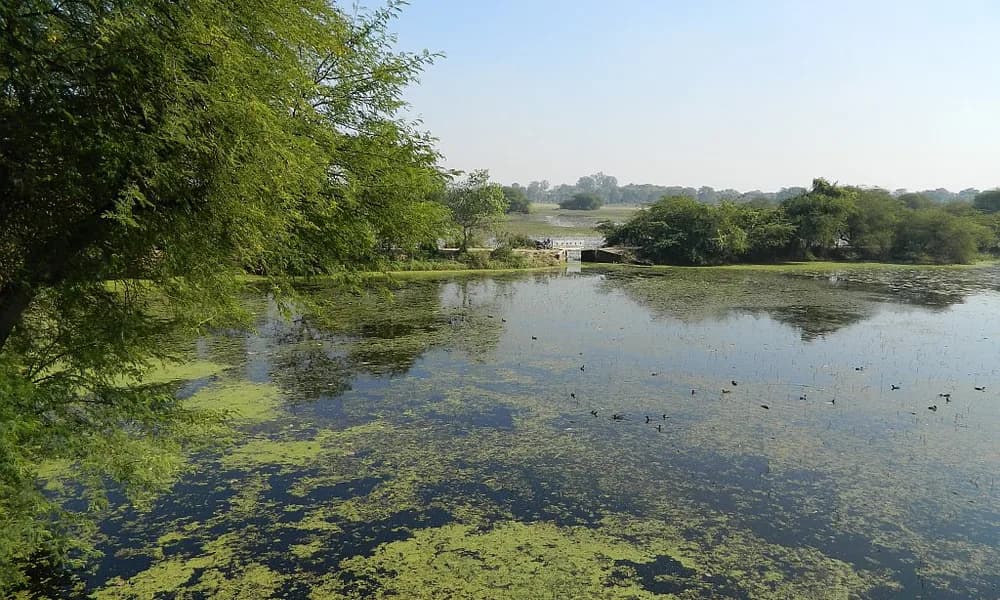
India has 103 Ramsar sites as of 15 October 2026, when Sukhna Wetland (Chandigarh) and Sauj Jheel (Mainpuri, Uttar Pradesh) were added. Together they cover more than 13.87 lakh hectares across 28 states and union territories. India has the most Ramsar sites in Asia and ranks third in the world by number of sites. The count was 26 in 2014. Tamil Nadu has the most sites (20), followed by Uttar Pradesh (14). These figures are from the PIB backgrounder of 25 October 2026, which cites MoEFCC and the Ramsar Secretariat.
Key highlights
- Total: 103 Ramsar sites (15 October 2026), over 13.87 lakh ha, in 28 states and UTs.
- Rank: first in Asia, third in the world by number of sites.
- Most sites: Tamil Nadu (20), then Uttar Pradesh (14).
- First sites: Chilika Lake (Odisha) and Keoladeo National Park (Rajasthan), 1 October 1981.
- Largest: Sundarban Wetland, West Bengal (4,23,000 ha, designated 30 January 2019).
- Montreux Record: Keoladeo National Park and Loktak Lake. Chilika was removed in 2002.
- 2026 additions: 7 sites, from 96 at the end of 2025 to 103: Patna Bird Sanctuary and Chhari-Dhand (97th, 98th), Shekha Jheel (99th), Surha Tal (100th), Glaw Lake (101st), Sukhna and Sauj Jheel (102nd and 103rd).
How many Ramsar sites are in India?
103, as of 15 October 2026. India became a party to the Ramsar Convention on 1 February 1982, and its first two sites, Chilika Lake and Keoladeo National Park, date from 1 October 1981. The list grew slowly for three decades and then very fast: from 26 sites in 2014 to 96 by the end of 2025 (11 added in 2025 alone), and 103 by October 2026.
| Milestone | India’s Ramsar count |
|---|---|
| 1 October 1981 | 2 (Chilika, Keoladeo) |
| 2014 | 26 |
| End of 2025 | 96 |
| 31 January 2026 | 98, after Patna Bird Sanctuary and Chhari-Dhand |
| 22 April 2026 (Earth Day) | 99, Shekha Jheel |
| 5 June 2026 (World Environment Day) | 100, Surha Tal |
| 3 August 2026 | 101, Glaw Lake |
| 15 October 2026 | 103, Sukhna Wetland and Sauj Jheel |
For Prelims, lock the current total and the milestone sites. Questions on new listings almost always ask the state, and sometimes the rank (99th, 100th, 101st).
Ramsar sites added in 2026
| Rank | Site | State (district) | Announced | Why it stands out |
|---|---|---|---|---|
| 97th | Patna Bird Sanctuary | Uttar Pradesh (Etah) | 31 Jan 2026 | In Etah, UP, not Patna, Bihar |
| 98th | Chhari-Dhand | Gujarat (Kutch) | 31 Jan 2026 | Seasonal saline wetland on the Banni edge |
| 99th | Shekha Jheel | Uttar Pradesh (Aligarh) | 22 Apr 2026 | Lake formed beside the Upper Ganga Canal |
| 100th | Surha Tal (Jai Prakash Narayan Bird Sanctuary) | Uttar Pradesh (Ballia) | 5 Jun 2026 | Oxbow lake of the Ganga |
| 101st | Glaw Lake | Arunachal Pradesh (Lohit) | 3 Aug 2026 | Arunachal’s first, inside Kamlang Tiger Reserve |
| 102nd–103rd | Sukhna Wetland | Chandigarh | 15 Oct 2026 | Reservoir built in 1958 at the Shivalik foothills; Chandigarh’s first |
| 102nd–103rd | Sauj Jheel | Uttar Pradesh (Mainpuri) | 15 Oct 2026 | Floodplain lake with more than 30,000 waterbirds |
Sukhna Wetland is a human-made reservoir at the foot of the Shivalik hills. It shelters threatened species such as Pallas’s fish eagle, the common pochard and the black pond turtle, and is a feeding and wintering stop on the Central Asian Flyway (Ramsar Site No. 2602).
Sauj Jheel is a shallow floodplain lake in Mainpuri district that regularly holds more than 30,000 waterbirds, including the sarus crane and the greater spotted eagle. Its sacred lotus and wild sugarcane beds give cover to nesting birds, fish and amphibians (Ramsar Site No. 2603). It is Uttar Pradesh’s 14th site.
The PIB and the Ramsar Secretariat announced Sukhna and Sauj Jheel together. Some notes number them 102nd and 103rd in that order, but the official sources treat them as a joint addition, so do not build a question around which came first.
State-wise list of Ramsar sites in India
| State / UT | Sites | | Tamil Nadu | 20 | | Uttar Pradesh | 14 | | Bihar | 6 | | Odisha | 6 | | Punjab | 6 | | Gujarat | 5 | | Jammu and Kashmir | 5 | | Madhya Pradesh | 5 | | Rajasthan | 5 | | Karnataka | 4 | | Himachal Pradesh | 3 | | Kerala | 3 | | Maharashtra | 3 | | Haryana | 2 | | Ladakh | 2 | | West Bengal | 2 | | Andhra Pradesh | 1 | | Arunachal Pradesh | 1 | | Assam | 1 | | Chandigarh | 1 | | Chhattisgarh | 1 | | Goa | 1 | | Jharkhand | 1 | | Manipur | 1 | | Mizoram | 1 | | Sikkim | 1 | | Tripura | 1 | | Uttarakhand | 1 | Tamil Nadu and Uttar Pradesh together hold a third of India’s sites. Twelve states and UTs have only one, including Chandigarh (Sukhna) and Arunachal Pradesh (Glaw Lake), which got their first in 2026.
The full list of all 103 sites, grouped by state:
| # | State / UT | Ramsar site | Designated | Area (ha) |
|---|---|---|---|---|
| 1 | Andhra Pradesh | Kolleru Lake | 19 Aug 2002 | 90,100 |
| 2 | Arunachal Pradesh | Glaw Lake (Lohit) | 3 Aug 2026* | 129 |
| 3 | Assam | Deepor Beel | 19 Aug 2002 | 4,000 |
| 4 | Bihar | Kanwar Jheel (Kabartal) | 21 Jul 2020 | 2,620 |
| 5 | Bihar | Nagi Bird Sanctuary | 11 Oct 2023 | 205.82 |
| 6 | Bihar | Nakti Bird Sanctuary | 11 Oct 2023 | 332.61 |
| 7 | Bihar | Gokul Jalashay | 13 May 2025 | 448 |
| 8 | Bihar | Udaipur Jheel | 13 May 2025 | 319 |
| 9 | Bihar | Gogabil Lake | 13 May 2025 | 86.63 |
| 10 | Chandigarh | Sukhna Wetland | 15 Oct 2026 | — |
| 11 | Chhattisgarh | Kopra Jalashay | 8 Aug 2025 | 210 |
| 12 | Goa | Nanda Lake | 8 Jun 2022 | 42 |
| 13 | Gujarat | Nalsarovar | 24 Sep 2012 | 12,000 |
| 14 | Gujarat | Wadhvana Wetland | 5 Apr 2021 | 630 |
| 15 | Gujarat | Thol Lake Wildlife Sanctuary | 5 Apr 2021 | 699 |
| 16 | Gujarat | Khijadia Wildlife Sanctuary | 13 Apr 2021 | 512 |
| 17 | Gujarat | Chhari-Dhand (Kutch) | 31 Jan 2026* | 22,700 |
| 18 | Haryana | Sultanpur National Park | 25 May 2021 | 143 |
| 19 | Haryana | Bhindawas Wildlife Sanctuary | 25 May 2021 | 412 |
| 20 | Himachal Pradesh | Pong Dam Lake | 19 Aug 2002 | 15,662 |
| 21 | Himachal Pradesh | Chandertal Wetland | 8 Nov 2005 | 49 |
| 22 | Himachal Pradesh | Renuka Wetland | 8 Nov 2005 | 20 |
| 23 | Jharkhand | Udhwa Lake Bird Sanctuary | 8 Jan 2024 | 935.5 |
| 24 | Karnataka | Ranganathittu Bird Sanctuary | 15 Feb 2022 | 518 |
| 25 | Karnataka | Aghanashini Estuary | 14 Feb 2023 | 4,801 |
| 26 | Karnataka | Magadi Kere Conservation Reserve | 14 Feb 2023 | 54.38 |
| 27 | Karnataka | Ankasamudra Bird Conservation Reserve | 10 Mar 2023 | 98.76 |
| 28 | Kerala | Ashtamudi Wetland | 19 Aug 2002 | 6,140 |
| 29 | Kerala | Sasthamkotta Lake | 19 Aug 2002 | 373 |
| 30 | Kerala | Vembanad-Kol Wetland | 19 Aug 2002 | 151,250 |
| 31 | Madhya Pradesh | Bhoj Wetlands | 19 Aug 2002 | 3,201 |
| 32 | Madhya Pradesh | Sirpur Wetland | 7 Jan 2022 | 161 |
| 33 | Madhya Pradesh | Sakhya Sagar | 7 Jan 2022 | 248 |
| 34 | Madhya Pradesh | Yashwant Sagar | 7 Jan 2022 | 823 |
| 35 | Madhya Pradesh | Tawa Reservoir | 8 Jan 2024 | 20,050 |
| 36 | Maharashtra | Nandur Madhameshwar | 21 Jun 2019 | 1,437 |
| 37 | Maharashtra | Lonar Lake | 22 Jul 2020 | 427 |
| 38 | Maharashtra | Thane Creek | 13 Apr 2022 | 6,521 |
| 39 | Manipur | Loktak Lake | 23 Mar 1990 | 26,600 |
| 40 | Mizoram | Pala Wetland | 31 Aug 2021 | 1,850 |
| 41 | Odisha | Chilika Lake | 1 Oct 1981 | 116,500 |
| 42 | Odisha | Bhitarkanika Mangroves | 19 Aug 2002 | 65,000 |
| 43 | Odisha | Satkosia Gorge | 12 Oct 2021 | 98,197 |
| 44 | Odisha | Tampara Lake | 12 Oct 2021 | 300 |
| 45 | Odisha | Hirakud Reservoir | 12 Oct 2021 | 65,400 |
| 46 | Odisha | Ansupa Lake | 12 Oct 2021 | 231 |
| 47 | Punjab | Harike Lake | 23 Mar 1990 | 4,100 |
| 48 | Punjab | Kanjli Lake | 22 Jan 2002 | 183 |
| 49 | Punjab | Ropar Lake | 22 Jan 2002 | 1,365 |
| 50 | Punjab | Beas Conservation Reserve | 26 Sep 2019 | 6,429 |
| 51 | Punjab | Keshopur-Miani Community Reserve | 26 Sep 2019 | 344 |
| 52 | Punjab | Nangal Wildlife Sanctuary | 26 Sep 2019 | 116 |
| 53 | Rajasthan | Keoladeo National Park | 1 Oct 1981 | 2,873 |
| 54 | Rajasthan | Sambhar Lake | 23 Mar 1990 | 24,000 |
| 55 | Rajasthan | Menar Wetland Complex | 19 Feb 2025 | 463.41 |
| 56 | Rajasthan | Khichan Wetland | 19 Feb 2025 | 54.19 |
| 57 | Rajasthan | Siliserh Lake | 7 Jul 2025 | 315.97 |
| 58 | Sikkim | Khecheopalri Wetland | 15 Jul 2024 | 172 |
| 59 | Tamil Nadu | Point Calimere Wildlife and Bird Sanctuary | 19 Aug 2002 | 38,500 |
| 60 | Tamil Nadu | Koonthankulam Bird Sanctuary | 8 Nov 2021 | 72 |
| 61 | Tamil Nadu | Chitrangudi Bird Sanctuary | 8 Nov 2021 | 260 |
| 62 | Tamil Nadu | Karikili Bird Sanctuary | 8 Apr 2022 | 58 |
| 63 | Tamil Nadu | Pichavaram Mangrove | 8 Apr 2022 | 1,479 |
| 64 | Tamil Nadu | Pallikaranai Marsh Reserve Forest | 8 Apr 2022 | 1,248 |
| 65 | Tamil Nadu | Gulf of Mannar Marine Biosphere Reserve | 8 Apr 2022 | 52,672 |
| 66 | Tamil Nadu | Vembannur Wetland Complex | 8 Apr 2022 | 20 |
| 67 | Tamil Nadu | Vellode Bird Sanctuary | 8 Apr 2022 | 77 |
| 68 | Tamil Nadu | Udhayamarthandapuram Bird Sanctuary | 8 Apr 2022 | 44 |
| 69 | Tamil Nadu | Vedanthangal Bird Sanctuary | 8 Apr 2022 | 40 |
| 70 | Tamil Nadu | Suchindram Theroor Wetland Complex | 8 Apr 2022 | 94 |
| 71 | Tamil Nadu | Vaduvur Bird Sanctuary | 8 Apr 2022 | 113 |
| 72 | Tamil Nadu | Kanjirankulam Bird Sanctuary | 8 Apr 2022 | 97 |
| 73 | Tamil Nadu | Karaivetti Bird Sanctuary | 24 May 2023 | 453.72 |
| 74 | Tamil Nadu | Longwood Shola Reserve Forest | 24 May 2023 | 116.01 |
| 75 | Tamil Nadu | Kazhuveli Bird Sanctuary | 16 Jan 2024 | 5,151.6 |
| 76 | Tamil Nadu | Nanjarayan Bird Sanctuary | 16 Jan 2024 | 125.86 |
| 77 | Tamil Nadu | Sakkarakottai Bird Sanctuary | 15 Jul 2024 | 230.5 |
| 78 | Tamil Nadu | Therthangal Bird Sanctuary | 15 Jul 2024 | 29.3 |
| 79 | Tripura | Rudrasagar Lake | 8 Nov 2005 | 240 |
| 80 | Uttar Pradesh | Upper Ganga River (Brijghat to Narora) | 8 Nov 2005 | 26,590 |
| 81 | Uttar Pradesh | Nawabganj Bird Sanctuary | 19 Sep 2019 | 225 |
| 82 | Uttar Pradesh | Sarsai Nawar Jheel | 19 Sep 2019 | 161 |
| 83 | Uttar Pradesh | Sandi Bird Sanctuary | 26 Sep 2019 | 309 |
| 84 | Uttar Pradesh | Samaspur Bird Sanctuary | 3 Oct 2019 | 799 |
| 85 | Uttar Pradesh | Parvati Arga Bird Sanctuary | 2 Dec 2019 | 722 |
| 86 | Uttar Pradesh | Saman Bird Sanctuary | 2 Dec 2019 | 526 |
| 87 | Uttar Pradesh | Sur Sarovar | 21 Aug 2020 | 431 |
| 88 | Uttar Pradesh | Haiderpur Wetland | 13 Apr 2021 | 6,908 |
| 89 | Uttar Pradesh | Bakhira Wildlife Sanctuary | 29 Jun 2021 | 2,894 |
| 90 | Uttar Pradesh | Patna Bird Sanctuary (Etah) | 31 Jan 2026* | 108.86 |
| 91 | Uttar Pradesh | Shekha Jheel Bird Sanctuary (Aligarh) | 22 Apr 2026* | 40.31 |
| 92 | Uttar Pradesh | Jai Prakash Narayan Bird Sanctuary (Surha Tal) (Ballia) | 5 Jun 2026* | — |
| 93 | Uttar Pradesh | Sauj Jheel (Mainpuri) | 15 Oct 2026 | — |
| 94 | Uttarakhand | Asan Conservation Reserve | 21 Jul 2020 | 444 |
| 95 | West Bengal | East Kolkata Wetlands | 19 Aug 2002 | 12,500 |
| 96 | West Bengal | Sundarban Wetland | 30 Jan 2019 | 423,000 |
| 97 | Jammu and Kashmir | Wular Lake | 23 Mar 1990 | 18,900 |
| 98 | Jammu and Kashmir | Surinsar-Mansar Lakes | 8 Nov 2005 | 350 |
| 99 | Jammu and Kashmir | Hokera Wetland | 8 Nov 2005 | 1,375 |
| 100 | Jammu and Kashmir | Hygam Wetland Conservation Reserve | 8 Jun 2022 | 802 |
| 101 | Jammu and Kashmir | Shallbugh Wetland Conservation Reserve | 8 Jun 2022 | 1,675 |
| 102 | Ladakh | Tsomoriri | 19 Aug 2002 | 12,000 |
| 103 | Ladakh | Tso Kar Wetland Complex | 17 Nov 2020 | 9,577 |
| * For sites announced in 2026, the date shown is the public announcement, which is the date exams and news use. The date on the Ramsar Secretariat’s list can be earlier. Areas for the newest sites are left blank until the Ramsar Information Sheets are checked; the area for Glaw Lake is from the announcement. |
Largest, smallest and other records
| Record | Ramsar site | Detail |
|---|---|---|
| Largest | Sundarban Wetland, West Bengal | 4,23,000 ha; over 60% of India’s mangrove area |
| Second largest | Vembanad-Kol Wetland, Kerala | 1,51,250 ha; largest brackish wetland on the southwest coast |
| Third largest | Chilika Lake, Odisha | 1,16,500 ha; brackish lagoon with Irrawaddy dolphins |
| Smallest | Vembannur Wetland Complex (Tamil Nadu) and Renuka Wetland (Himachal Pradesh) | About 20 ha each |
| First sites | Chilika Lake and Keoladeo National Park | 1 October 1981 |
| State with most sites | Tamil Nadu | 20 sites |
| Indus river dolphin | Beas Conservation Reserve, Punjab | India’s only known population of the endangered Indus river dolphin |
| Meteorite crater lake | Lonar Lake, Maharashtra | Saline-alkaline crater lake |
| High-altitude lakes | Tsomoriri and Tso Kar (Ladakh) | Black-necked crane and bar-headed goose |
Montreux Record: Indian sites
The Montreux Record is the Ramsar register of sites where the ecological character has changed, is changing, or is likely to change, and which need priority attention. A site can be removed once remedial measures work.
Two Indian sites are on it:
- Keoladeo National Park, Rajasthan
- Loktak Lake, Manipur
Chilika Lake was on the Montreux Record and was removed in 2002 after restoration. Its Chilika Development Authority later won the Ramsar Wetland Conservation Award. A favourite trap is to list Chilika as a current Montreux site.
What is the Ramsar Convention?
The Convention on Wetlands, called the Ramsar Convention, is an intergovernmental treaty adopted at Ramsar, Iran, on 2 February 1971. It entered into force in 1975. That date is why 2 February is World Wetlands Day. It has 172 contracting parties, and its Secretariat is in Gland, Switzerland.
The Convention rests on three pillars: the wise use of all wetlands, the designation and management of Ramsar sites, and international cooperation. A wetland qualifies as a Wetland of International Importance if it meets at least one of nine criteria:
| Group | Criterion | A wetland qualifies if it… |
|---|---|---|
| A: Wetland types | 1 | contains a representative, rare or unique wetland type in its biogeographic region |
| B: Species and communities | 2 | supports vulnerable, endangered or critically endangered species or threatened communities |
| 3 | supports populations important for the biodiversity of a region | |
| 4 | supports species at a critical stage of their life cycle, or gives refuge in adverse conditions | |
| B: Waterbirds | 5 | regularly supports 20,000 or more waterbirds |
| 6 | regularly supports 1% of a population of one waterbird species or subspecies | |
| B: Fish | 7 | supports a significant share of indigenous fish species, families or life stages |
| 8 | is an important food source, spawning ground, nursery or migration path for fish | |
| B: Other taxa | 9 | regularly supports 1% of a population of a wetland-dependent non-bird animal |
How a wetland is designated in India
- The state or UT government identifies a wetland and checks it against the nine criteria.
- The Ministry of Environment, Forest and Climate Change (MoEFCC) approves the proposal and informs the Ramsar Secretariat.
- Site details and maps are filed in the Ramsar Information Sheet.
- MoEFCC and the Secretariat review it, and the site is listed with a designation certificate.
After listing, the site is deemed notified under the Wetlands (Conservation and Management) Rules, 2017, which were framed under the Environment (Protection) Act, 1986. The Ramsar Information Sheet must be updated every six years. Ramsar listing is international recognition; enforcement on the ground still runs through state wetland authorities and forest departments.
Wetland schemes to know
- National Plan for Conservation of Aquatic Ecosystems (NPCA): merged the national lake and wetland programmes; guidelines updated in 2024.
- Amrit Dharohar: promotes Ramsar sites through conservation, nature tourism, livelihoods and wetland carbon assessment.
- Mission Sahbhagita and the Save Wetlands Campaign: citizen-led wetland mapping, launched in Goa on 4 February 2023.
- MISHTI: mangrove restoration on 540 sq km across nine states and four UTs.
- Wetland Cities: Indore and Udaipur became India’s first Ramsar-accredited Wetland Cities in January 2025.
- Ramsar COP15 (Victoria Falls, Zimbabwe): adopted India’s resolution on Promoting Sustainable Lifestyles for the Wise Use of Wetlands.
Ramsar sites in UPSC: previous year questions
UPSC asks about Ramsar sites in both Prelims and Mains. These are the questions in the UPSCYatra PYQ bank:
Prelims
- 2026: Madhav National Park. One statement tested whether Sakhya Sagar, a Ramsar site, lies inside the park.
- 2019: Ramsar Convention and the Wetlands Rules. Is India obliged to protect all its wetlands under Ramsar, and what do the Wetlands Rules cover?
- 2014: Wetlands International. Is it an intergovernmental body of Ramsar signatories?
- 2010: How Ramsar sites should be maintained. The idea tested is wise use.
Mains (GS III)
- 2023, 15 marks: National Wetland Conservation Programme and India’s Ramsar sites.
- 2018, 10 marks: What is a wetland? The Ramsar concept of wise use, with two Indian examples.
The pattern is clear. Prelims tests the convention’s rules (wise use, what Ramsar does and does not oblige) and location (which park or state a site is in). Mains asks you to explain wise use and name real Indian sites, so keep two or three examples ready with one fact each, such as Chilika’s restoration, East Kolkata Wetlands’ wastewater fisheries, or Beas Conservation Reserve’s river dolphins.
Facts that are easy to mix up
Patna Bird Sanctuary is in Uttar Pradesh. It is in Etah district, not Patna, Bihar.
Chilika is not on the Montreux Record now. It was removed in 2002. Keoladeo and Loktak are the current Indian entries.
Ramsar does not oblige India to protect every wetland. It applies to listed sites and the wise-use principle; domestic protection comes from the Wetlands Rules, 2017.
Uttar Pradesh is second, not first. Tamil Nadu has 20 sites; UP has 14.
Sukhna and Sauj Jheel were added together. Both on 15 October 2026, taking India from 101 to 103.
Surha Tal and Jai Prakash Narayan Bird Sanctuary are the same site. It was the 100th, not the 101st. Glaw Lake was the 101st.
Frequently asked questions
How many Ramsar sites are there in India in 2026?
India has 103 Ramsar sites as of 15 October 2026, covering more than 13.87 lakh hectares in 28 states and union territories.
Which state has the most Ramsar sites in India?
Tamil Nadu, with 20 sites. Uttar Pradesh is second with 14.
Which is the largest Ramsar site in India?
Sundarban Wetland in West Bengal, at 4,23,000 hectares, designated on 30 January 2019.
Which is the smallest Ramsar site in India?
The smallest by listed area are Vembannur Wetland Complex in Tamil Nadu and Renuka Wetland in Himachal Pradesh, about 20 hectares each.
Which were India’s first Ramsar sites?
Chilika Lake in Odisha and Keoladeo National Park in Rajasthan, both on 1 October 1981.
Which Indian Ramsar sites are on the Montreux Record?
Keoladeo National Park (Rajasthan) and Loktak Lake (Manipur). Chilika Lake was removed in 2002.
What are the latest Ramsar sites in India?
Sukhna Wetland (Chandigarh) and Sauj Jheel (Mainpuri, Uttar Pradesh), added on 15 October 2026. Before them came Glaw Lake, the 101st, on 3 August 2026.
Which was India’s 100th Ramsar site?
Surha Tal (Jai Prakash Narayan Bird Sanctuary) in Ballia, Uttar Pradesh, announced on 5 June 2026. Read the Surha Tal explainer.
When did India join the Ramsar Convention?
On 1 February 1982. The Convention itself was adopted on 2 February 1971 at Ramsar, Iran.