
Shekha Jheel (also spelled Sheikha Jheel) is a small freshwater wetland in Aligarh district, western Uttar Pradesh. On 22 April 2026 — Earth Day — Union Environment Minister Bhupender Yadav announced its designation as a Wetland of International Importance under the Ramsar Convention. It is India’s 99th Ramsar site and Uttar Pradesh’s 12th. The lake is not a cut-off of the Ganga. It formed beside the Upper Ganga Canal, opened in 1852, and is a winter stop on the Central Asian Flyway for birds such as the bar-headed goose and the painted stork.
Key highlights
- Announcement date: 22 April 2026 (Earth Day) — India’s 99th Ramsar site.
- Location: Koil tehsil, Aligarh district, western Uttar Pradesh — not Alwar, Rajasthan.
- Official Ramsar name: Sheikha Jheel Bird Sanctuary (Site no. 2594); news and exam notes usually say Shekha Jheel.
- Type: Perennial freshwater lake that came into existence after the Upper Ganga Canal (1852).
- Ramsar area: 40.309 hectares (Ramsar Information Sheet).
- State tally: Uttar Pradesh rose to 12 sites — then the highest state count, before Surha Tal took it to 13.
- Exam hook: Canal-fed flyway wetland in Aligarh; pair bar-headed goose + painted stork + Earth Day 2026.
- Official coverage: PIB; News on AIR; Ramsar RIS 2594.
Where is Shekha Jheel?
Shekha Jheel lies on the Upper Gangetic Plain, in Koil tehsil of Aligarh, a western-UP district on the Delhi–Kanpur belt. The nearest large town is Aligarh itself. That location is the first exam trap. Aligarh is in Uttar Pradesh. Alwar is in Rajasthan. A hastily read option that moves the jheel west of the Aravallis is wrong.
The Ramsar Information Sheet places the sanctuary on a flat mosaic of wetland, grassland, dry deciduous patches, and wheat–paddy fields. The eastern boundary is the Upper Ganga Canal. Village limits of Bhawankheda, Nagla Banjara and Daulatpur run to the north; Shekha, Dumhaira and Adalpur to the south; Bhojpur to the west. The official site area is 40.309 hectares — a compact bird sanctuary, not a multi-square-kilometre floodplain lake.
| Fact | Detail |
|---|---|
| Official / common names | Sheikha Jheel Bird Sanctuary; Shekha Jheel |
| State / district / tehsil | Uttar Pradesh / Aligarh / Koil |
| Coordinates (approx.) | 27.97° N, 78.18° E |
| Ramsar site number | 2594 |
| Official area | 40.309 ha |
| Origin | Freshwater lake after the Upper Ganga Canal, 1852 |
| Sanctuary notification | 8 February 2016 (Wildlife (Protection) Act, 1972) |
| IBA code | IBA-IN-UP-21 |
| Announced as Ramsar | 22 April 2026 (Earth Day) |
| India’s Ramsar rank | 99th site (UP’s 12th) |
Aspirants should keep district (Aligarh) and origin (canal) as a pair. If a question shows a tiny western-UP wetland on a flyway, think Shekha. If it shows a large eastern-UP oxbow, think Surha Tal.
What is a canal-fed wetland?
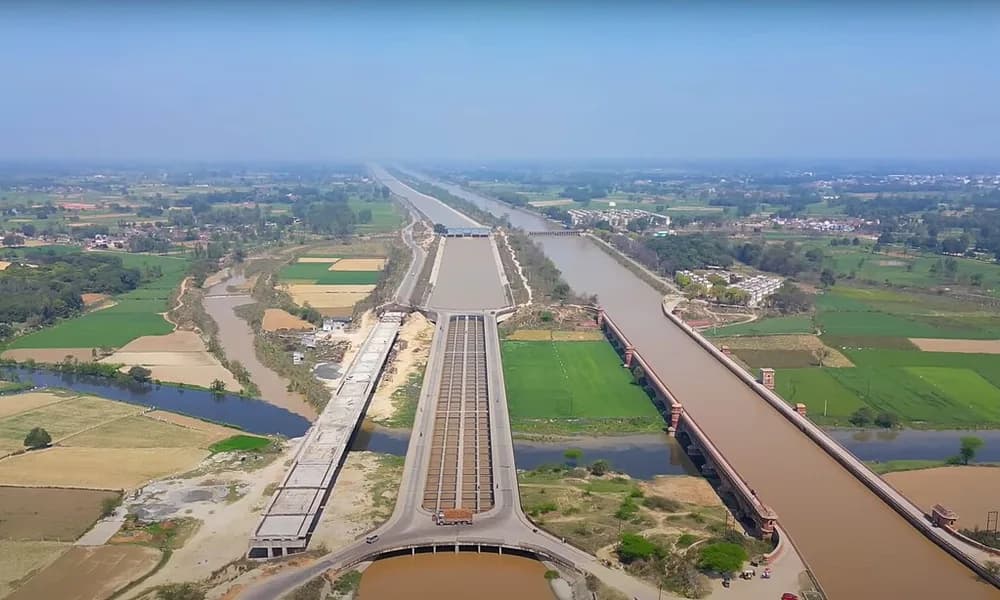
A canal-fed wetland is a lake, marsh, or depression whose water budget depends on seepage, overflow, or adjacent flow from an irrigation canal rather than on a natural cut-off of a river. Shekha Jheel is the textbook case in this 2026 cluster. The RIS is explicit: it is a perennial freshwater body that came into existence after the formation of the Upper Ganges Canal in 1852, which still flows beside the lake.
The Upper Ganga Canal is a mid-nineteenth-century irrigation work that takes Ganga water from Haridwar into the doab of western Uttar Pradesh. It is a human landscape that now hosts wild birds. That is the geography lesson. Colonial canal commands created waterlogged hollows, borrow pits, and seepage lakes. Some of those accidental wetlands became bird sanctuaries. Shekha is one of them.
Do not confuse the canal with the Upper Ganga River Ramsar site. The latter is a stretch of the Ganga itself, from Brijghat to Narora — a linear river site listed years earlier. Shekha Jheel is a lake next to the canal, not a designated reach of the river. Mixing the two names is a high-probability trap.
Also do not call Shekha an oxbow. An oxbow is an abandoned meander. Surha Tal in Ballia is that landform. Shekha is not.
What is a Ramsar site?
A Ramsar site is a wetland placed on the List of Wetlands of International Importance under the Ramsar Convention, adopted in 1971 in Ramsar, Iran. India acceded in 1982. The listing does not replace Indian wildlife law. Shekha Jheel was already a sanctuary, notified on 8 February 2016 under section 18 of the Wildlife (Protection) Act, 1972. Ramsar adds an international inventory and a duty to maintain ecological character.
Sites are designated when they meet at least one of nine criteria. The Shekha RIS uses several. Criterion 2 covers threatened species. Criterion 3 covers biological diversity. Criterion 4 covers support during critical life-cycle stages or adverse conditions (here, a summer and hard-winter refuge when other jheels dry). Criterion 5 is the 20,000-waterbird threshold. Uttar Pradesh Forest Department and the Bombay Natural History Society counted 21,462 waterbirds in 2022–23, 19,827 in 2023–24, and 22,366 in 2024–25; the sheet estimates over 20,000 individuals in peak winter. That is why a 40-hectare lake can still be “internationally important”: numbers, not hectares, drive Criterion 5.
Wise use on a canal wetland means keeping the water regime, controlling invasive plants, and limiting disturbance on a site that already has watchtowers and visitors. It does not mean dismantling the canal that created the lake.
Why Shekha Jheel was listed
The minister’s PIB and News on AIR lines stressed three things: livelihoods, biodiversity, and water and climate security, plus the flyway. The Information Sheet fills in the ecology.
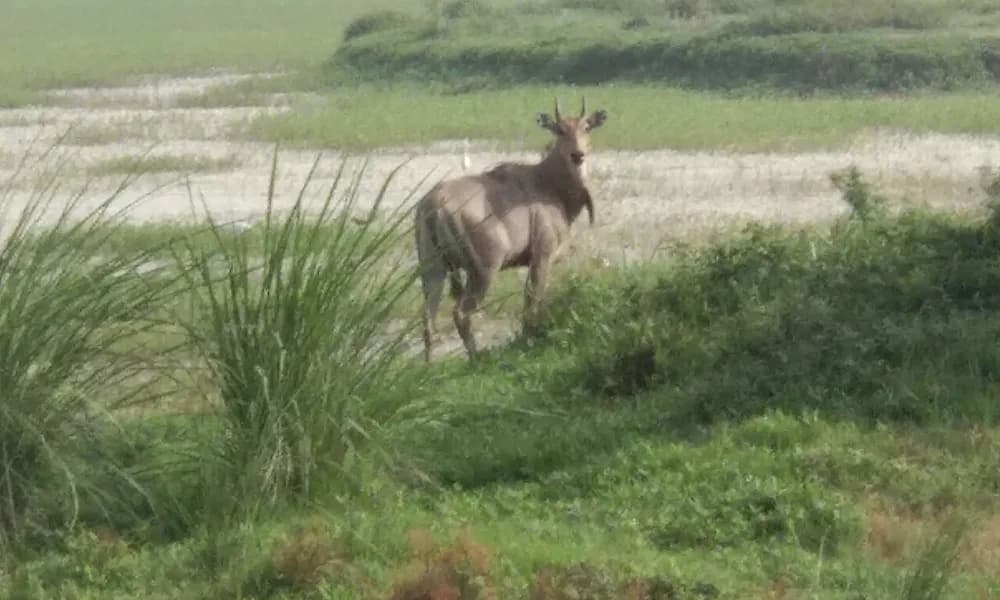
The site records 249 bird species, of which 62 are waterbirds or wetland-dependent. Other RIS totals: 140 plants, 19 fish, 15 reptiles, 12 mammals. Four waterbirds are listed as vulnerable: river tern (Sterna aurantia), sarus crane (Antigone antigone / Grus antigone), common pochard (Aythya ferina), and greater spotted eagle (Clanga clanga / Aquila clanga). Three turtles matter for a reptile line: the endangered Indian softshell (Nilssonia gangetica) and spotted pond turtle (Geoclemys hamiltonii), and the vulnerable Indian flapshell (Lissemys punctata). Mammals around the jheel include nilgai, jackal, jungle cat, and porcupine.
BirdLife International lists the sanctuary as IBA-IN-UP-21 on threatened-species and congregatory-waterbird criteria. That IBA tag predates the Ramsar announcement. Designation did not invent the bird importance; it internationalised a site already known to the forest department and to BNHS counters.
The Central Asian Flyway
A flyway is a broad corridor that migratory birds use between breeding and wintering grounds. The Central Asian Flyway links Arctic and Central Asian breeding areas with South Asian wintering wetlands. India sits at the southern end. Gangetic jheels, reservoirs, and river edges are the refuelling points.
Shekha Jheel is a stopover and wintering site on that flyway, not a Himalayan breeding lake. The minister named two flagship visitors: the bar-headed goose (Anser indicus) and the painted stork (Mycteria leucocephala). The RIS adds a longer winter list — greylag goose, northern pintail, northern shoveler, gadwall, common teal, red-crested pochard, common pochard, ruddy shelduck, common crane, and others.
The bar-headed goose is the species to understand, not just to name. It breeds on high Central Asian plateaus and lakes and winters on the Indian plains. It is famous in school geography for crossing the Himalaya at extreme altitude. A western-UP canal jheel is one of the places those birds actually land. That is the flyway made concrete.
The painted stork is a large resident and local migrant wader of Indian wetlands, not an Arctic visitor. Seeing both names in one PIB sentence is a reminder that “migratory” on a flyway site includes long-distance Palearctic ducks and South Asian waterbirds that move with the seasons inside the subcontinent.
Patna Bird Sanctuary in Etah — also western UP, also on the same flyway — is the nearest 2026 sibling. Surha Tal is farther east, on the Ganga oxbow belt. Chhari-Dhand in Kutch sits on a different, more western desert–coast corridor. Do not flatten every 2026 wetland into “Central Asian Flyway” without the map.
Aligarh’s small lake, large counts
Forty hectares is smaller than many of India’s listed floodplain lakes. That is the point of Criterion 5. A compact, perennial, canal-side lake can hold twenty thousand waterbirds in a good winter because surrounding seasonal marshes dry and birds pack into the remaining water. The RIS says the site supports about 30 bird species through the breeding cycle or through adverse periods, including summer scarcity. Open water, shallow marsh, emergent plants, and mudflats sit together in a small mosaic. That mosaic, not wilderness acreage, is the habitat.
Pressures on the sheet include invasive alien species (medium impact), agricultural runoff from the upper catchment, and the usual recreation and drainage risks of a sanctuary next to fields and a canal. Wise use here is canal-basin water management plus weed and visitor control. It is not a tiger-reserve story and not a monsoon-oxbow story.
Spelling will generate fake options. The RIS title is Sheikha Jheel Bird Sanctuary. Indian news, the PIB headline style, and most exam compilations use Shekha Jheel. Both refer to the same Aligarh wetland. Write Shekha in an answer; know Sheikha if an official sheet appears in a statement.
India’s Ramsar tally around Earth Day 2026
Shekha Jheel is the step before the century.
| Year / milestone | India’s Ramsar count |
|---|---|
| 2014 | 26 |
| World Wetlands Day window, 31 January 2026 | 98, after Patna Bird Sanctuary and Chhari-Dhand |
| Earth Day, 22 April 2026 | 99, Shekha Jheel (UP’s 12th) |
| World Environment Day, 5 June 2026 | 100, Surha Tal (UP’s 13th) |
| 3 August 2026 | 101, Glaw Lake (Arunachal Pradesh’s first) |
The minister’s line on 22 April was that the listing brought India “closer to a historic century.” Six weeks later, Surha Tal crossed that line. Glaw Lake then took the network into a north-eastern Himalayan state that had had no Ramsar site at all.
At the June 2026 century announcement, India was described as first in Asia and third globally after the United Kingdom and Mexico. Those ranks attach to the 100th-site moment. For Shekha’s April news, the clean facts are 99th in India and 12th in Uttar Pradesh.
UP’s older cluster still matters for match-the-following: the Upper Ganga River (Brijghat–Narora), Haiderpur, Bakhira, Nawabganj, Sur Sarovar, Sarsai Nawar, Samaspur, Sandi, Saman, Parvati Arga, then the 2026 trio of Patna (Etah), Shekha (Aligarh), and Surha (Ballia). After Shekha, the state led the tally at 12. After Surha, it led at 13.
Montreux Record remains a separate fact. Shekha is a new listing, not a Montreux site.
Why this matters for UPSC
Prelims. The high-yield string is: Shekha Jheel — Aligarh, Uttar Pradesh — 99th Ramsar site — Earth Day, 22 April 2026 — Upper Ganga Canal, 1852 — Central Asian Flyway — bar-headed goose and painted stork — UP’s 12th. Traps: Alwar; oxbow; 100th site; Patna, Bihar; Upper Ganga River site; Glaw Lake’s tiger-reserve setting.
GS-3. Use Shekha to argue that international wetland listing now includes irrigation-command wetlands, not only “pristine” lakes. A 40-hectare canal jheel that regularly holds twenty thousand waterbirds is an argument about ecological function, not about size. Pair that with wise use: the canal stays; the water regime and invasive species become the management problem.
GS-1 / geography. Place Aligarh in the Ganga–Yamuna doab. Explain the Upper Ganga Canal as a colonial irrigation spine that accidentally created bird habitat. Contrast canal seepage lakes with Ganga oxbows further east.
Species. Bar-headed goose = high-altitude Himalayan migrant on the Central Asian Flyway. Painted stork = large Indian wetland stork. Sarus crane = vulnerable, and Uttar Pradesh’s state bird — useful if a question asks which 2026 site is also sarus country. Do not invent a death toll or a tourist number.
Current affairs stacking. January (Patna + Chhari-Dhand), April (Shekha), June (Surha), August (Glaw). Calendar hooks are how this set will be asked.
This explainer sits alongside the Places in News timeline, which logs the same designation as a geography event.
Facts that are easy to mix up
Aligarh versus Alwar. Aligarh is Uttar Pradesh. Alwar is Rajasthan. This is the first spelling trap.
Shekha versus Sheikha. Same sanctuary. RIS uses Sheikha; Indian official news uses Shekha.
99 versus 100 versus 101. Shekha is 99 (Earth Day). Surha Tal is 100 (World Environment Day). Glaw is 101 (3 August). Do not promote Shekha to the century mark.
Canal versus river versus oxbow. Shekha = canal-side lake, 1852. Upper Ganga River Ramsar site = a river stretch, Brijghat to Narora. Surha Tal = Ganga oxbow in Ballia. Glaw = mountain lake in Kamlang.
Patna Bird Sanctuary. Etah district, Uttar Pradesh — not Patna, Bihar, and not Aligarh.
Area. Use 40.309 ha from the RIS. Secondary notes that say “about 25 hectares” are undershooting the official sheet. Do not invent a larger sanctuary figure.
Sanctuary year. The legal notification on the RIS is 8 February 2016. Social-forestry work on the lake is older; do not treat an informal 2010 date as the sanctuary gazette.
Delhi. News commentary noted that the National Capital Territory still had no Ramsar site when Shekha was listed. That is a side fact, not a reason to place Shekha in Delhi.
How designation works in India
The Uttar Pradesh Forest Department compiled the Information Sheet (data years 2021–2023). MoEFCC, as the National Ramsar Administrative Authority, sent it to the Secretariat in Gland. The RIS records a designation date of 19 January 2026 and publication on 21 April 2026. The minister announced the listing the next day, 22 April, on Earth Day. For Prelims, the date that was in every newspaper is 22 April 2026. If a statement says the Secretariat’s designation date was 19 January, that can also be true — it is the sheet date, not the political calendar hook.
Once listed, India is expected to maintain ecological character. Day-to-day management stays with the Aligarh forest division. Ramsar is not a separate police. That is the same treaty-versus-statute point as on every other 2026 site, but the local twist is canal hydrology: water allocation in the Upper Ganga command will decide whether a 40-hectare lake still holds twenty thousand birds.
Prelims snapshot
| Question type | Answer to lock |
|---|---|
| State / district | Uttar Pradesh / Aligarh (Koil tehsil) |
| Rank | India’s 99th Ramsar site; UP’s 12th |
| Date / hook | 22 April 2026, Earth Day |
| Origin | Upper Ganga Canal, 1852 |
| Official area | 40.309 ha |
| Flyway | Central Asian Flyway |
| Flagship birds (PIB) | Bar-headed goose, painted stork |
| Sanctuary year | 2016 |
| Convention | Ramsar, 1971; India a party since 1982 |
| Do not confuse with | Alwar; Surha Tal (Ballia, 100th, oxbow); Upper Ganga River site; Patna, Bihar |
Frequently asked questions
What is Shekha Jheel and where is it located?
Shekha Jheel (Sheikha Jheel Bird Sanctuary) is a perennial freshwater lake in Koil tehsil, Aligarh district, Uttar Pradesh. It sits beside the Upper Ganga Canal and was announced as India’s 99th Ramsar site on 22 April 2026.
Why is Shekha Jheel in the news in 2026?
It became India’s 99th Ramsar site on Earth Day, taking Uttar Pradesh to 12 internationally recognised wetlands and placing India one listing short of 100.
Is Shekha Jheel in Alwar?
No. It is in Aligarh, Uttar Pradesh. Alwar is a district in Rajasthan. That swap is a common exam distractor.
How did the lake form?
It is a canal-created wetland. The Ramsar Information Sheet says the freshwater body came into existence after the Upper Ganga Canal was formed in 1852. It is not an oxbow of the Ganga.
How many Ramsar sites did India have after Shekha Jheel?
99, as of 22 April 2026. The count moved to 100 on 5 June with Surha Tal and to 101 on 3 August with Glaw Lake.
Which birds should aspirants remember?
From the ministerial announcement: bar-headed goose and painted stork, plus wintering ducks on the Central Asian Flyway. The official sheet also flags sarus crane, river tern, common pochard, and greater spotted eagle among threatened waterbirds, and records 249 bird species in all.
What should UPSC aspirants remember about Shekha Jheel?
Aligarh (not Alwar), 99th Ramsar site, Earth Day 22 April 2026, UP’s 12th site, Upper Ganga Canal 1852, 40.309 ha, Central Asian Flyway, bar-headed goose and painted stork, sanctuary notified 2016, India party to Ramsar since 1982.
Sources
- PIB — Shekha Jheel Bird Sanctuary announced as India’s 99th Ramsar site
- News on AIR — Union Minister announces Shekha Jheel as a Ramsar site
- DD News — Shekha Jheel declared India’s 99th Ramsar site
- Ramsar Information Sheet — Sheikha Jheel Bird Sanctuary (Site 2594)
- Ramsar Convention on Wetlands
- Places in News timeline
- Related explainers: Surha Tal, India’s 100th Ramsar site, Glaw Lake, India’s 101st Ramsar site, Patna Bird Sanctuary, Chhari-Dhand