
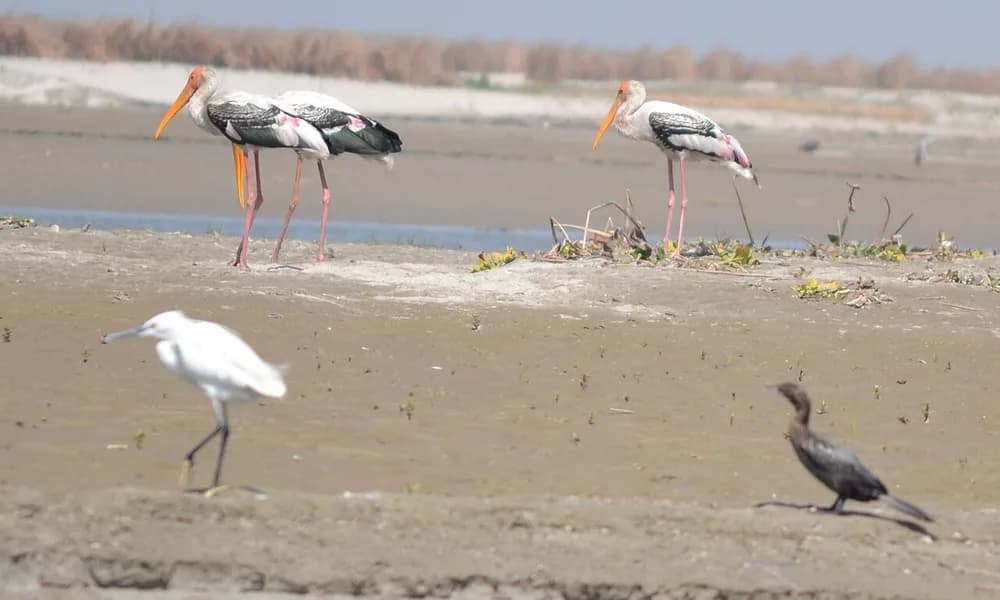
Patna Bird Sanctuary is a freshwater wetland in Etah district, Uttar Pradesh. It is not in Patna, Bihar. On 31 January 2026, Union Environment Minister Bhupender Yadav announced its designation as a Wetland of International Importance under the Ramsar Convention, together with Chhari-Dhand in Kutch. Patna is India’s 97th Ramsar site. The two announcements, made ahead of World Wetlands Day on 2 February, took India’s list to 98. The sanctuary is a compact Gangetic-plain wetland on the Central Asian Flyway and an Important Bird and Biodiversity Area identified by BirdLife International.
Key highlights
- Announcement date: 31 January 2026 — India’s 97th Ramsar site; paired with Chhari-Dhand (98th).
- Location trap: Etah district, Uttar Pradesh — not Patna, Bihar.
- Type: Freshwater marshes with woodland and grassland, set in an agricultural landscape.
- Area of the Ramsar site: about 109 hectares (national / RSIS listings give 108.9 ha).
- BirdLife status: Important Bird and Biodiversity Area (IBA).
- Secretariat note: 178 bird species and 252 plant species recorded at the site.
- Exam hook: Central Asian Flyway wintering ground; name-and-state trap is the most likely Prelims error.
- Official sources: PIB, 31 January 2026; News on AIR.
Where is Patna Bird Sanctuary?
The sanctuary sits in western Uttar Pradesh, in Etah, on the agricultural mosaic of the Ganga–Yamuna doab. That is the same broad floodplain belt that already holds several of the state’s Ramsar bird sanctuaries — Saman, Sandi, Sarsai Nawar, Nawabganj — but those sites are in other districts. Patna is a small, named wetland, not a stretch of the Ganga itself.
The name is the exam problem. Coaching lists and hurried current-affairs notes often drop the district. Once that happens, the brain fills in Bihar’s capital. The official announcement from the Ministry of Environment, Forest and Climate Change is unambiguous: Patna Bird Sanctuary, Etah, Uttar Pradesh. Write the triad — name, district, state — every time you revise the site.
| Fact | Detail |
|---|---|
| Official name | Patna Bird Sanctuary |
| State / district | Uttar Pradesh / Etah |
| Coordinates (approx.) | 27.49° N, 78.42° E |
| Ramsar area | ~109 ha (108.9 ha in national listings) |
| Wetland type | Freshwater marshes, woodland, grassland |
| Surrounding land use | Agriculture |
| Announced by | Union MoEFCC minister Bhupender Yadav |
| India’s Ramsar rank | 97th site (Chhari-Dhand was the 98th the same day) |
| Flyway | Central Asian Flyway |
| BirdLife status | Important Bird and Biodiversity Area |
Aspirants should keep Etah and freshwater as paired facts. The same day’s other listing, Chhari-Dhand, is a seasonal saline desert wetland. A match-the-following item that swaps those two habitats is a fair question.
What is a Ramsar site?
A Ramsar site is a wetland placed on the List of Wetlands of International Importance under the Ramsar Convention, adopted in 1971 in Ramsar, Iran. India became a Contracting Party on 1 February 1982. Designation does not invent a new category in the Wildlife (Protection) Act. It is an international recognition that the site meets at least one of nine ecological criteria — for example, it supports vulnerable species, or it regularly holds a large number of waterbirds, or it is a representative wetland type in its biogeographic region.
India already protects many of these places as bird sanctuaries, wildlife sanctuaries, or wetlands under the Wetlands (Conservation and Management) Rules, 2017. Ramsar listing adds a global inventory, reporting duties, and political attention. It is also the fact UPSC tests: “Which of the following is a Ramsar site?” remains a staple of Environment in Prelims.
Wise use — the Convention’s core idea — means using the wetland so that ecological character is maintained. For a small sanctuary inside farmland, that means keeping water in the basin, limiting encroachment, and treating the surrounding fields as part of the bird habitat, not as a wall around a pond.
Why Patna Bird Sanctuary was listed
The Ramsar Convention secretariat note, reported by The Indian Express at the time of the announcement, describes a mosaic: freshwater marshes, woodlands and grasslands, ringed by agriculture. Those three habitats in a small area produce more niches than a single open tank. The same note records 178 bird species and 252 plant species, and states that the sanctuary is particularly important for waterbird populations. BirdLife International had already listed it as an Important Bird and Biodiversity Area.
That combination — IBA plus a documented waterbird congregation on a recognised flyway — is the usual ecological case for a Gangetic bird sanctuary. The political case in January 2026 was calendar-driven. World Wetlands Day falls on 2 February, the anniversary of the Convention. India has used that window before to announce new sites. PIB recorded the minister’s statement that the network had grown by over 276 per cent, from 26 sites in 2014 to 98 after the two listings.
Do not inflate the area. National and Ramsar Information Service figures cluster around 108.9–109 hectares. That is a little over one square kilometre. It is one of the smaller bird sanctuaries in Uttar Pradesh. Size is not the criterion. Regular use by migratory waterbirds is.
Central Asian Flyway and the western Uttar Pradesh belt
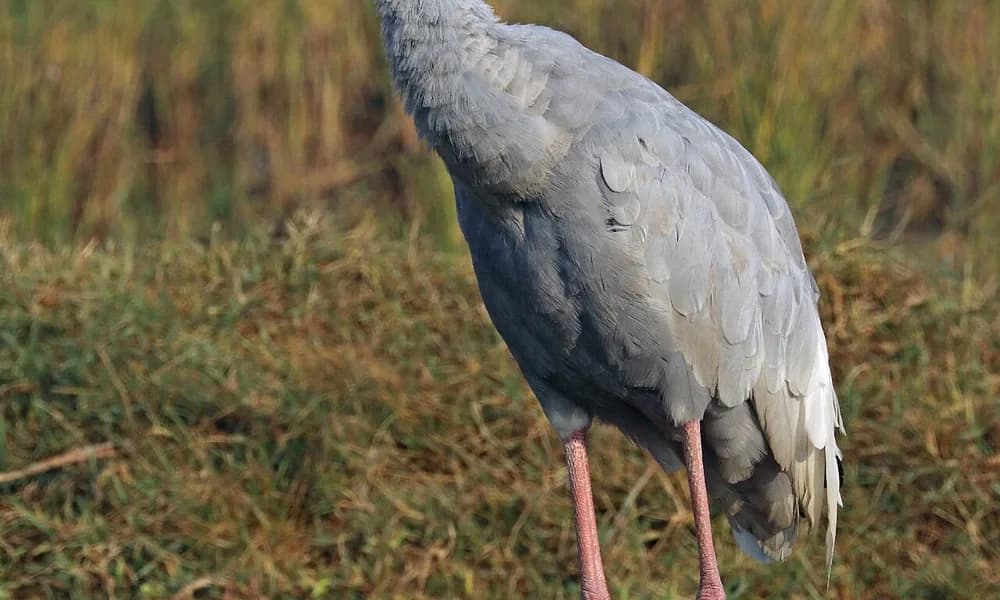
The Central Asian Flyway is the migration corridor used by waterbirds moving between breeding grounds in Central Asia and wintering grounds on the Indian subcontinent. Uttar Pradesh sits under the middle and southern part of that route. Shallow, rain-fed or floodplain wetlands in the doab become wintering and staging sites from roughly October to March.
Patna belongs to that family of sites, not to the Himalayan-lake family represented later in 2026 by Glaw Lake in Arunachal Pradesh, and not to the saline desert family represented the same day by Chhari-Dhand. In an exam answer, the useful contrast is habitat plus state:
- Patna — freshwater, Etah, Uttar Pradesh, ~109 ha, 97th.
- Chhari-Dhand — seasonal saline, Kutch, Gujarat, ~22,700 ha, 98th.
- Shekha Jheel — Aligarh, Uttar Pradesh, 99th (Earth Day, 22 April 2026); the state’s 12th.
- Surha Tal — Ballia, Uttar Pradesh, 100th (World Environment Day, 5 June 2026).
Western Uttar Pradesh already had Ramsar names that look similar on a map: Sur Sarovar (Keetham) near Agra, Haiderpur on the Upper Ganga, Sarsai Nawar in Etawah. Patna is a new name in that cluster. Do not merge it with Sur Sarovar or with the Upper Ganga River Ramsar stretch.
PIB’s 31 January release mentioned chinkara, wolves, caracal, desert cats and desert foxes while describing the two wetlands together. Those desert mammals belong to the Kutch landscape, not to an Etah marsh. Attribute them to Chhari-Dhand. For Patna, stay with waterbirds, plants, IBA status, and the agricultural setting.
India’s Ramsar tally: 26 to 98, then 101
The political fact attached to the January 2026 pair is the growth of India’s list:
| Year / milestone | India’s Ramsar count |
|---|---|
| 2014 | 26 |
| World Wetlands Day window, 31 January 2026 | 98, after Patna (97th) and Chhari-Dhand (98th) |
| Earth Day, 22 April 2026 | 99, Shekha Jheel |
| World Environment Day, 5 June 2026 | 100, Surha Tal |
| 3 August 2026 | 101, Glaw Lake |
India has been a party to the Convention since 1982. By mid-2026 it had the highest number of Ramsar sites in Asia. Quantity is not quality. Several Indian sites face invasive plants, pollution, or hydrological change. Listing is the start of reporting, not proof that a wetland is safe.
For Mains GS-3, the useful argument is sequential. First, India expanded the list rapidly after 2014, including many state bird sanctuaries inside farmland. Second, Patna shows that a small wetland can still meet international criteria if it holds waterbirds on a flyway. Third, designation only works if the surrounding agriculture does not drain, poison, or encroach on the basin.
Montreux Record — the list of Ramsar sites where ecological character has changed for the worse — remains a separate Prelims fact. Patna is a new listing, not a Montreux site.
Why this matters for UPSC
Environment in Prelims rewards precise location plus a convention fact. Patna Bird Sanctuary supplies both, and it supplies a trap.
Prelims. Expect a statement that places the sanctuary in Bihar, or a match-the-following that pairs “Patna Bird Sanctuary” with “Patna district”. The correct pair is Etah, Uttar Pradesh. Also expect a habitat swap with Chhari-Dhand (freshwater versus saline desert) and a rank swap (97th versus 98th). IBA status and the Central Asian Flyway are the two conceptual add-ons.
GS-3. A short Mains paragraph can use Patna to illustrate: (a) wetland conservation under an international treaty; (b) the role of small, farm-fringed wetlands on a continental flyway; (c) the difference between a bird sanctuary under Indian law and a Ramsar listing; (d) why Wise Use has to include the agricultural catchment, not only the water-spread.
Geography. Place Etah in western Uttar Pradesh, between the Ganga and Yamuna, east of Agra and Aligarh. The sanctuary is a lentic (still-water) basin, not a riverine Ramsar stretch like the Upper Ganga site.
Current affairs stacking. Treat January 2026 as a two-site day. One revision table for Patna and Chhari-Dhand beats two isolated notes. Then add Shekha, Surha Tal, and Glaw as the later 2026 rungs.
This explainer sits alongside the Places in News timeline, which logs the same designation as a geography event.
Facts that are easy to mix up
Several nearby names will be used as distractors.
Patna the city versus Patna the sanctuary. The city is the capital of Bihar. The sanctuary is in Etah, Uttar Pradesh. This is the one fact that must survive a tired last-minute revision.
97th versus 98th. Patna was announced as the 97th; Chhari-Dhand as the 98th. Together they took India to 98. A question that says “Patna is India’s 98th Ramsar site” is false.
Announcement date versus secretariat date. Current-affairs coverage and the government announcement use 31 January 2026. The Ramsar Sites Information Service records a designation date of 4 December 2025 for this site (reference number 2589 in secondary listings). For a Prelims current-affairs item keyed to World Wetlands Day, use the January announcement. If a question cites the RSIS date, do not treat the two as contradictory — secretariat listing and ministerial announcement are different events.
Area. Use about 109 hectares. Do not write tens of square kilometres. That figure belongs to Chhari-Dhand.
Desert fauna. Chinkara, caracal and desert fox are Kutch facts. They are not Etah facts.
Shekha and Surha. Both are later 2026 Uttar Pradesh listings. Shekha Jheel (Aligarh) is the 99th; Surha Tal (Ballia) is the 100th. Do not collapse all three UP names into one note.
How designation works in India
States propose wetlands through their wetland authorities. MoEFCC vets the Ramsar Information Sheet and sends it to the Ramsar Secretariat in Gland, Switzerland. The Secretariat adds the site to the list when documentation and maps meet the standards set by the Conference of the Parties. Ministers often announce designation on a calendar hook — World Wetlands Day (2 February), Earth Day (22 April), World Environment Day (5 June). Patna and Chhari-Dhand were announced in the World Wetlands Day window.
Once listed, India is expected to maintain the ecological character of the site and to apply wise-use principles. Domestic enforcement still runs through forest and wetland rules, not through a Ramsar police. That distinction is worth a line in a Mains answer on the effectiveness of international environmental agreements.
Patna was already a bird sanctuary under state forest administration. Ramsar is a layer on that domestic status. A statement that “Ramsar listing created the sanctuary” is false. A statement that “the sanctuary is now also a Wetland of International Importance” is true.
Prelims snapshot
| Question type | Answer to lock |
|---|---|
| State | Uttar Pradesh |
| District | Etah |
| Rank | India’s 97th Ramsar site |
| Same-day pair | Chhari-Dhand, Kutch, Gujarat (98th) |
| Type | Freshwater wetland / bird sanctuary |
| Date (announcement) | 31 January 2026 |
| Convention | Ramsar, 1971; India a party since 1 February 1982 |
| Flyway | Central Asian Flyway |
| Site area | ~109 ha |
| Extra label | Important Bird and Biodiversity Area |
Frequently asked questions
What is Patna Bird Sanctuary and where is it located?
Patna Bird Sanctuary is a freshwater bird sanctuary in Etah district, Uttar Pradesh. It is a compact wetland of about 109 hectares, with marshes, woodland and grassland inside an agricultural landscape. It is not in Patna, Bihar.
Why is Patna Bird Sanctuary in the news in 2026?
It became India’s 97th Ramsar site. The Union environment minister announced the listing on 31 January 2026, ahead of World Wetlands Day, together with Chhari-Dhand in Gujarat. The two sites took India’s Ramsar count to 98.
Is Patna Bird Sanctuary in Bihar?
No. The name is the trap. The sanctuary is in Etah, Uttar Pradesh. Patna city is the capital of Bihar and is a different place.
How many Ramsar sites did India have after this announcement?
98, after Patna (97th) and Chhari-Dhand (98th) on 31 January 2026. The count later rose to 99 (Shekha Jheel), 100 (Surha Tal) and 101 (Glaw Lake) in the same year.
What is the Central Asian Flyway?
It is a major bird-migration corridor between Central Asia and the Indian subcontinent. Many of Uttar Pradesh’s wintering waterbirds use it. Patna Bird Sanctuary is a wintering and staging site on that route.
Does Ramsar listing mean Patna Bird Sanctuary is a national park?
No. National parks and sanctuaries are notified under the Wildlife (Protection) Act. Patna is a bird sanctuary. Ramsar is an international designation layered on that domestic status.
What should UPSC aspirants remember about Patna Bird Sanctuary?
State (Uttar Pradesh), district (Etah), not Bihar, 97th Ramsar site, freshwater, Central Asian Flyway, IBA, about 109 ha, announced 31 January 2026 with Chhari-Dhand, India a party to Ramsar since 1982.
Sources
- PIB — two new wetlands added to India’s Ramsar list, 31 January 2026
- News on AIR — Environment Minister announces two new Ramsar sites
- PIB — Prime Minister welcomes the two listings
- The Indian Express — secretariat note on habitats, IBA status, species counts
- Ramsar Convention on Wetlands
- Places in News timeline
- Related explainers: Chhari-Dhand, Shekha Jheel, Surha Tal, Glaw Lake