
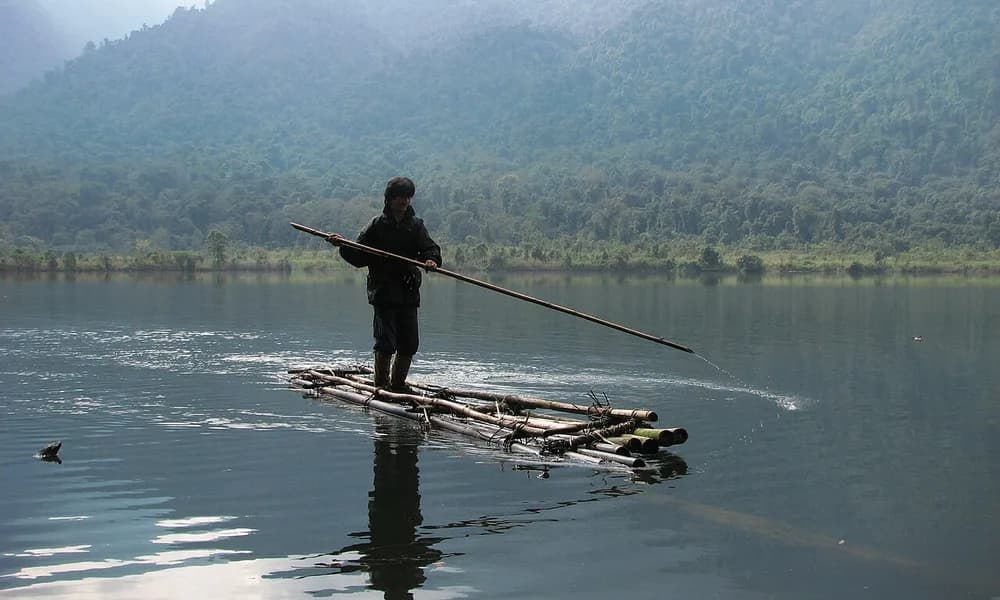
Glaw Lake, also written Glaw Tuwi or Glow Lake, is a freshwater wetland in Lohit district, Arunachal Pradesh. On 3 August 2026, Union Environment Minister Bhupender Yadav announced its designation as a Wetland of International Importance under the Ramsar Convention. It is India’s 101st Ramsar site and Arunachal Pradesh’s first. The 129-hectare lake sits inside Kamlang Tiger Reserve and Wildlife Sanctuary in the Eastern Himalaya and helps regulate the Kamlang River.
Key highlights
- Designation date: 3 August 2026 — India’s 101st Ramsar site; Arunachal Pradesh’s first.
- Location: Lohit district, Arunachal Pradesh, inside Kamlang Tiger Reserve / Wildlife Sanctuary.
- Also known as: Glaw Tuwi / Glow Lake.
- Area of the Ramsar site: 129 hectares (Wetlands International South Asia).
- Type: Natural freshwater lake fed by perennial mountain streams.
- Exam hook: India moved from 26 Ramsar sites in 2014 to 101 in August 2026; Glaw is the first Eastern Himalayan high-country wetland from Arunachal on the list.
- Official explainer: Wetlands International South Asia.
Where is Glaw Lake?
Glaw Lake lies in the Eastern Himalayan biodiversity hotspot, in Lohit district of Arunachal Pradesh, near the Mishmi Hills landscape. The wetland is inside a tiger reserve, which is unusual among India’s newer Ramsar additions: most 2025–26 designations in the Gangetic plain sit in bird sanctuaries or agricultural mosaics. Here the lake is nested in dense forest, bounded in the wider landscape by the Lang River to the north and Namdapha National Park to the south.
The lake is fed by perennial mountain streams. It stores rainfall and runoff and then releases water more steadily into the Kamlang River. That buffering role — flood storage in the wet months, baseflow in the dry months — is one of the ecosystem services the Ramsar listing is meant to protect.
| Fact | Detail |
|---|---|
| Official / local names | Glaw Lake, Glaw Tuwi, Glow Lake |
| State / district | Arunachal Pradesh / Lohit |
| Coordinates (approx.) | 27.67° N, 96.43° E |
| Ramsar area | 129 ha |
| Setting | Kamlang Tiger Reserve and Wildlife Sanctuary |
| River link | Regulates flow of the Kamlang River |
| Announced by | Union MoEFCC minister Bhupender Yadav |
| India’s Ramsar rank | 101st site (state’s 1st) |
Aspirants should keep the district (Lohit) and the protected-area nest (Kamlang) as paired facts. Prelims items on new Ramsar sites almost always ask state, and often ask whether the wetland lies inside a national park, tiger reserve, or bird sanctuary.
What is a Ramsar site?
A Ramsar site is a wetland placed on the List of Wetlands of International Importance under the Ramsar Convention, adopted in 1971 in Ramsar, Iran. India acceded to the Convention in 1982. Designation does not create a new legal category in Indian wildlife law by itself. It is an international recognition that the site meets at least one of nine ecological criteria — for example, it supports vulnerable species, or it regularly holds a large number of waterbirds, or it is a rare example of a wetland type in its biogeographic region.
India already protects many of these places under the Wildlife (Protection) Act, 1972, the Wetlands (Conservation and Management) Rules, 2017, or as part of a tiger reserve or sanctuary. Ramsar listing adds a global inventory, reporting obligations, and political attention. It is also the fact UPSC tests: “Which of the following is a Ramsar site?” remains a staple of Environment questions in Prelims.
Wise use — the Convention’s core idea — means using the wetland so that ecological character is maintained. For Glaw Lake that includes keeping the catchment forest intact, because a mountain lake without its feeder streams and surrounding woodland is only a basin.
Why Glaw Lake was listed
The MoEFCC announcement stressed three layers at once: biodiversity, water and climate security, and livelihoods. Those are not decorative phrases. A high-altitude Eastern Himalayan lake stores water, damps downstream floods, and supports forest-dependent communities. Wetlands International South Asia notes that the site and its catchment record more than 150 tree species and 49 orchid species, and that the lake is habitat and wintering ground for waterbirds plus over 20 reptiles and amphibians.
The same briefing records that Glaw Lake is sacred to the Mishmi (including Miju, Digaru/Digaro, and Idu groups in the wider Kamlang landscape). Animistic practice treats forests, wildlife, and waterbodies as spiritually significant. That local ethic is now paired with Forest Department management and an integrated management plan being prepared with Wetlands International South Asia, after a 2024 memorandum with the State Wetland Authority of Arunachal Pradesh.
Do not confuse the 129-hectare Ramsar boundary with larger figures sometimes quoted for the lake-and-catchment landscape. Coaching notes occasionally give an area of several square kilometres; that is a catchment-scale number, not the designated site. For exam answers, use 129 ha unless a later Ramsar Information Sheet revises it.
Kamlang Tiger Reserve and the Eastern Himalaya
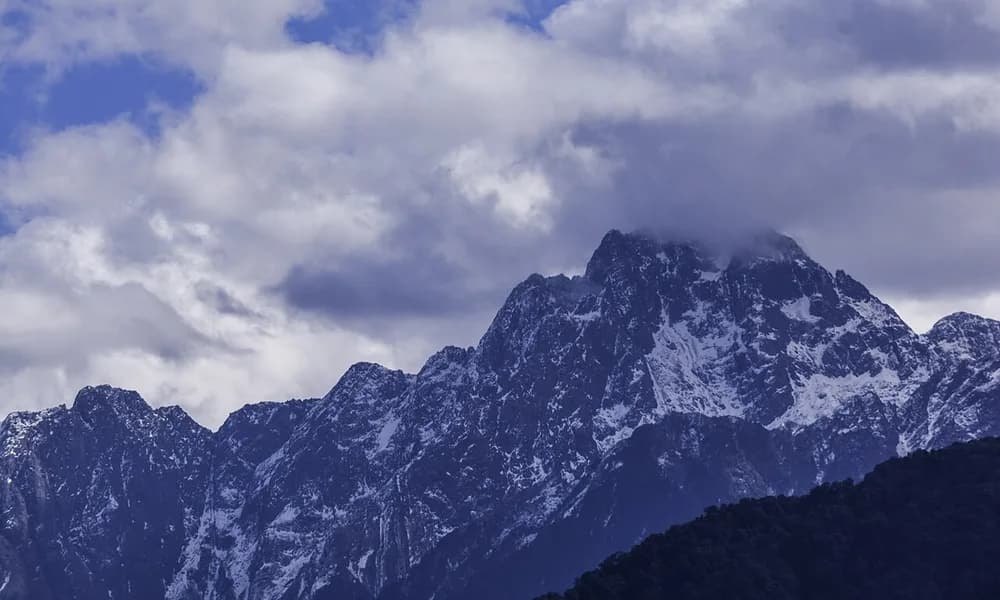
Kamlang is both a wildlife sanctuary and a tiger reserve in Lohit. Glaw Lake’s listing therefore sits at the junction of two UPSC themes that are usually taught separately: wetlands and Project Tiger / protected-area networks. A Ramsar site inside a tiger reserve is a reminder that conservation categories overlap. The same patch of land can be a sanctuary, a tiger reserve, a Ramsar wetland, and an Eastern Himalayan biodiversity hotspot.
The Eastern Himalaya is one of the world’s biodiversity hotspots because isolation, altitude, and heavy rainfall produce high endemism. A freshwater lake in that setting is not a replica of a Gangetic oxbow. It is colder, steeper, forest-fringed, and hydrologically tied to mountain streams rather than to a migrating Ganga channel. That is why Glaw is not interchangeable, in an exam answer, with Surha Tal in Ballia or Shekha Jheel in Aligarh. Those are plains wetlands on the Central Asian Flyway. Glaw is a Himalayan headwater wetland.
Namdapha National Park, immediately south of this landscape, is itself a frequent Prelims name (Namdapha flying squirrel, snowy-throated babbler, and the park’s location in Arunachal). Glaw does not lie inside Namdapha; keep the two names distinct.
India’s Ramsar tally: 26 to 101
The political fact attached to every 2026 wetland announcement is the growth of India’s list:
| Year / milestone | India’s Ramsar count |
|---|---|
| 2014 | 26 |
| World Wetlands Day window, 31 January 2026 | 98, after Patna Bird Sanctuary and Chhari-Dhand |
| Earth Day, 22 April 2026 | 99, Shekha Jheel (Uttar Pradesh’s 12th) |
| World Environment Day, 5 June 2026 | 100, Surha Tal / Jai Prakash Narayan Bird Sanctuary |
| 3 August 2026 | 101, Glaw Lake |
India is a party to the Convention since 1982. By mid-2026 it had the highest number of Ramsar sites in Asia, and among the highest globally (the United Kingdom and Mexico still lead on raw counts). Quantity is not quality: several Indian sites face invasive species, pollution, or hydrological alteration. Listing is the start of reporting, not proof that a wetland is safe.
For Mains GS-3 (environment), the useful argument is sequential. First, India expanded the list rapidly after 2014, including many state-level bird sanctuaries and urban wetlands. Second, Glaw extends that network into a north-eastern Himalayan state that previously had zero Ramsar sites. Third, designation only works if catchment forests, stream flows, and community rights are written into the management plan.
Montreux Record — the list of Ramsar sites where ecological character has changed for the worse — remains a separate Prelims fact. Glaw is a new listing, not a Montreux site.
Why this matters for UPSC
Environment in Prelims rewards precise location plus a convention fact. Glaw Lake supplies both.
Prelims. Expect match-the-following or statement questions: Glaw Lake — Arunachal Pradesh — Kamlang — 101st Ramsar site. Also expect a trap that places Glaw in Assam or in Namdapha, or that calls it India’s first Himalayan Ramsar site (it is not; several Himalayan wetlands were listed earlier, including in Jammu & Kashmir, Himachal, Sikkim, and Uttarakhand). The accurate superlative is Arunachal Pradesh’s first.
GS-3 / GS-1. A short Mains paragraph can use Glaw to illustrate: (a) wetland conservation under an international treaty; (b) overlap of tiger reserve and Ramsar governance; (c) community conservation (Mishmi) versus purely fortress conservation; (d) climate role of mountain wetlands as water towers.
Geography. Map the Lohit–Kamlang–Namdapha belt in eastern Arunachal, close to the Myanmar frontier. The Kamlang is a tributary-scale Himalayan river, not a trans-boundary trunk river like the Brahmaputra, but it belongs to that drainage.
Current affairs stacking. Treat 2026 as a Ramsar year: Patna and Chhari-Dhand in January, Shekha Jheel in April, Surha Tal in June, Glaw in August. One revision table beats five isolated notes.
This explainer sits alongside the Places in News timeline, which logs the same designation as a geography event.
Facts that are easy to mix up
Several nearby names will be used as distractors.
Glaw versus Glow. Official communications use Glaw; local and older map spellings include Glow and Glaw Tuwi. In an answer, Glaw Lake is enough; adding Glaw Tuwi shows you read the Ramsar brief.
Lake versus tiger reserve. Kamlang is the protected area. Glaw is the wetland inside it. A question that asks “Kamlang is a Ramsar site” is false.
101 versus 100. Surha Tal was the 100th, designated on World Environment Day 2026. Glaw is the 101st. Mixing the two dates is the most likely error in a hurried test.
Area. Use 129 hectares for the Ramsar site. Do not write 8 square kilometres unless you clearly mean a wider landscape figure from a secondary source.
First in the North-East. Assam, Manipur, Tripura, Sikkim and others already had Ramsar sites. Glaw is first in Arunachal Pradesh, not first in the North-East.
How designation works in India
States propose wetlands through their wetland authorities. MoEFCC vets the Ramsar Information Sheet and sends it to the Ramsar Secretariat in Gland, Switzerland. The Secretariat adds the site to the list when documentation is complete. Ministers often announce designation on a calendar hook — World Wetlands Day (2 February), Earth Day (22 April), World Environment Day (5 June). Glaw’s August date is simply when the file closed.
In July 2026 the government told Parliament that proposals for Glaw Lake (Arunachal Pradesh), Sukhna Wetland (Chandigarh), Gosabara-Mokarsagar (Gujarat) and Sauj Jheel (Uttar Pradesh) had been submitted. Glaw has now been designated. The others, if listed later, will be separate current-affairs items. Do not treat a Lok Sabha mention of a proposal as equivalent to listing.
Once listed, India is expected to maintain the ecological character of the site and to apply wise-use principles. Domestic enforcement still runs through forest and wetland rules, not through a Ramsar police. That distinction is worth a line in a Mains answer on “effectiveness of international environmental agreements.”
Prelims snapshot
| Question type | Answer to lock |
|---|---|
| State | Arunachal Pradesh |
| District | Lohit |
| Rank | India’s 101st Ramsar site |
| State first? | Yes |
| Protected area | Kamlang Tiger Reserve and Wildlife Sanctuary |
| Date | 3 August 2026 |
| Convention | Ramsar, 1971; India a party since 1982 |
| River | Kamlang |
| Site area | 129 ha |
Frequently asked questions
What is Glaw Lake and where is it located?
Glaw Lake (Glaw Tuwi) is a natural freshwater lake in Lohit district, Arunachal Pradesh, inside Kamlang Tiger Reserve and Wildlife Sanctuary in the Eastern Himalaya. It was designated a Ramsar site on 3 August 2026.
Why is Glaw Lake in the news in 2026?
It became India’s 101st Ramsar site and Arunachal Pradesh’s first wetland of international importance. The announcement was made by the Union environment minister and widely reported as the country crossing the 100-site mark earlier the same year.
Is Glaw Lake the same as Glow Lake?
Yes. Glow Lake and Glaw Tuwi are variant names for the same wetland. UPSC materials and the Ramsar-linked briefings use Glaw Lake.
How many Ramsar sites does India have after Glaw Lake?
101, as of the 3 August 2026 designation. The count was 26 in 2014, 98 after Patna Bird Sanctuary and Chhari-Dhand (January 2026), 99 after Shekha Jheel (April 2026), and 100 after Surha Tal (June 2026).
Does Ramsar listing mean Glaw Lake is a national park?
No. National parks and sanctuaries are notified under the Wildlife (Protection) Act. Glaw Lake is a wetland inside Kamlang, which is already a sanctuary and tiger reserve. Ramsar is an international designation layered on that domestic status.
Which river is linked to Glaw Lake?
The lake helps regulate the Kamlang River. It stores water from rainfall and mountain streams and releases it downstream.
What should UPSC aspirants remember about Glaw Lake?
State (Arunachal Pradesh), district (Lohit), 101st Ramsar site, first in the state, inside Kamlang Tiger Reserve, freshwater Himalayan lake, 3 August 2026, India party to Ramsar since 1982.
Sources
- Wetlands International South Asia — Glaw Lake, India’s 101st Ramsar site
- Union Environment Minister Bhupender Yadav’s 3 August 2026 announcement (MoEFCC / press reports)
- Ramsar Convention on Wetlands
- Places in News timeline
- Related explainers: Surha Tal, India’s 100th Ramsar site, Shekha Jheel, Patna Bird Sanctuary, Chhari-Dhand